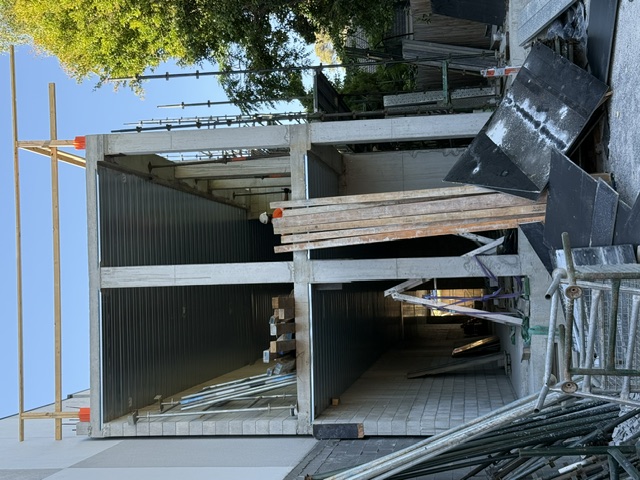
Why Choose Concrete Basements
We are specialists in basement construction, focused exclusively on below-ground structural work that requires technical capability, execution certainty, and long-term accountability.
Delivering complex basement projects for experienced property developers and builders across Melbourne.
Book a Project Consultation
Discuss your basement construction requirements with our specialists.
Basement Construction Is Our Specialisation
Basement construction is not standard concrete work. It requires different planning, different risk management, and different execution capabilities than above-ground pours. General concrete contractors who treat basements as routine slab work often underestimate the technical complexity and structural responsibility involved.
Unlike residential concreting or commercial slab pours, basement projects operate in constrained environments with unpredictable ground conditions, water ingress risks, and load-bearing requirements that affect the entire building structure above. Excavation depth, soil classification, groundwater pressure, and reinforcement density all create challenges that require specialised knowledge.
We do not operate as a general concrete contractor who handles basements as an occasional service line. We are a specialist basement construction company. This distinction is operational, not marketing. It means our crews are trained specifically for below-ground work. Our equipment is selected for deep excavation environments. Our project planning accounts for the risks that basement construction inherently carries.
We understand formwork systems designed for basement walls, reinforcement schedules for retaining structures, and pour sequencing that prevents cold joints in high-volume basement slabs. We plan for confined space access, material handling below ground level, and weather-related delays that affect excavation stability.
Basement construction requires contractors who understand the structural and logistical differences between above-ground and below-ground concrete work. We are that contractor.
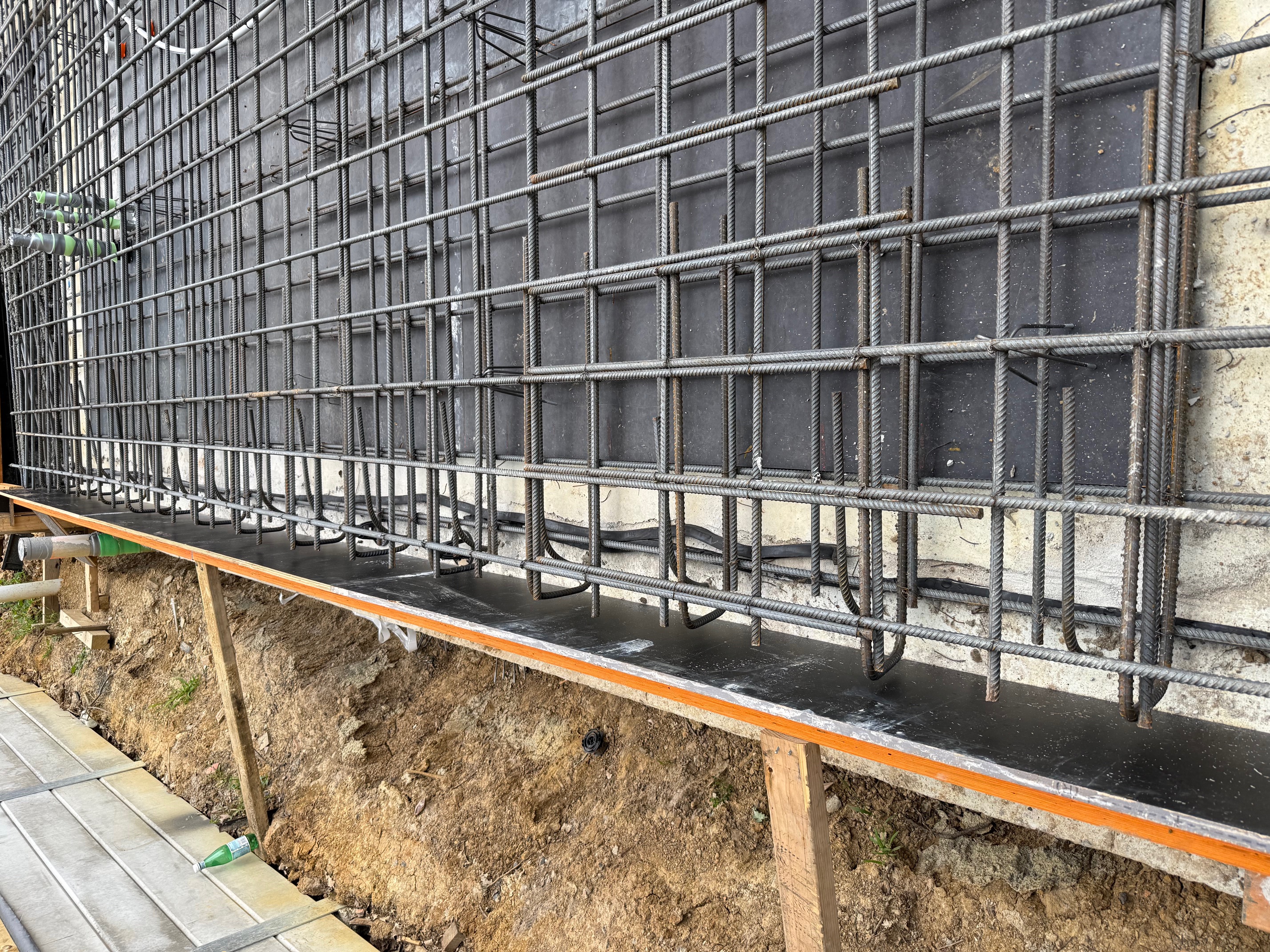
Designed for Melbourne Ground Conditions
Melbourne's geology is highly variable. Ground conditions can shift significantly within a single development site, and what appears uniform on a geotechnical report often reveals unexpected complexity during excavation. Clay soils with high plasticity, rock seams that vary in hardness, fluctuating water tables, and fill material from previous site use all create execution challenges.
We operate across Melbourne's inner, middle, and outer suburbs, and have encountered the full spectrum of ground conditions—from expansive reactive clay in the west to sandstone and basalt in the east, and highly saturated soils near watercourses and coastal zones. Each soil classification presents different risks for excavation stability, water ingress, and structural settlement.
Clay-Based Soils
Reactive clay soils require careful moisture management during excavation and post-construction. We account for seasonal movement, moisture variation, and the risk of foundation heave or settlement caused by prolonged wetting or drying cycles.
Rock and Hard Ground
Where rock or heavily compacted ground is present, excavation equipment and methods must be adjusted. Rock breaking, specialised excavators, and longer excavation timelines are standard expectations. We plan for these conditions and do not treat rock as an unforeseen disruption.
Groundwater and Drainage
High water tables, seasonal groundwater movement, and stormwater drainage all affect basement construction. We integrate dewatering systems, sump management, and drainage strategies into our construction planning to prevent water ingress during and after construction.
Site Access and Urban Constraints
Inner Melbourne sites often involve restricted access, neighbouring structures, and limited space for material storage and plant movement. We plan excavation logistics and equipment selection with these constraints in mind to prevent delays and site conflicts.
We do not apply generic basement construction methods to every site. We adapt our approach based on the specific ground conditions, water table depth, soil classification, and site constraints present on each project.
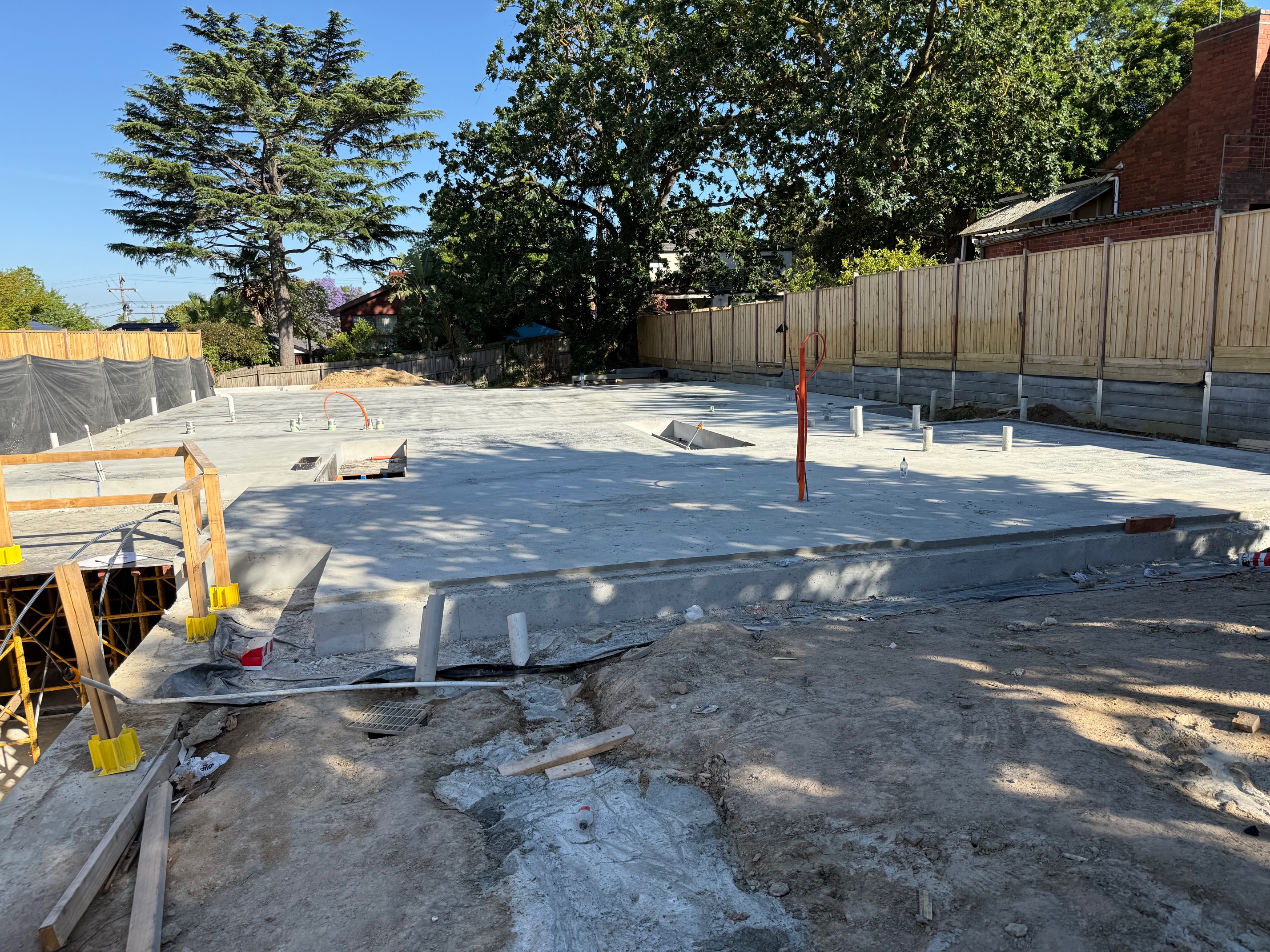
Structural Integrity Comes First
Basements are load-bearing infrastructure. They support the entire building structure above, resist lateral earth pressure from surrounding soil, and withstand hydrostatic pressure from groundwater. A basement is not decorative or cosmetic—it is fundamental to the structural performance and long-term stability of the development.
Structural integrity in basement construction depends on three core elements: accurate reinforcement placement, precise formwork execution, and appropriate concrete quality. Any compromise in these areas reduces structural capacity and increases the risk of cracking, settlement, or water ingress over time.
Load-Bearing Requirements
Basement walls and slabs carry vertical loads from the building above and horizontal loads from soil pressure. Reinforcement must be positioned accurately to resist bending moments, shear forces, and concentrated loads at column locations. We follow engineering specifications exactly—bar diameter, spacing, cover, and lap lengths are not approximations.
Reinforcement Detailing
Steel reinforcement provides tensile strength to concrete, which is inherently weak in tension. Incorrect bar placement, insufficient lap length, or inadequate cover can compromise structural capacity and lead to premature corrosion. Our steel fixing crews are trained to read and execute engineering reinforcement schedules with precision.
Engineering Principles in Practice
We work with structural engineers who design basement structures to meet Australian Standards (AS 3600, AS 2870, AS 1170). Our role is to execute their designs with accuracy and consistency. This includes coordinating formwork alignment, ensuring correct concrete cover over reinforcement, managing pour sequencing to avoid cold joints, and applying curing protocols that allow concrete to reach design strength without cracking.
Structural failures in basement construction rarely occur at the time of construction. They emerge months or years later—cracks caused by inadequate reinforcement, water ingress from poor concrete quality, settlement from insufficient load distribution. These failures are preventable through disciplined execution and adherence to engineering principles.
We build basement structures that meet their design load capacity and perform structurally for the life of the building. This is the standard we hold ourselves to on every project.
Safety-First Construction Practices
Basement construction carries significant safety risk. Excavation collapses, confined space hazards, material handling in restricted environments, and ground instability are all potential failure modes that can cause injury, project delays, and legal liability. Safety is not a compliance formality—it is a risk management discipline.
We approach every basement project with structured safety protocols. This includes daily site inspections, documented hazard identification processes, crew safety briefings, and contingency planning for weather-related risks or ground condition changes. Our crews are trained specifically for below-ground construction environments and understand the hazards unique to excavation work.
Excavation Safety
Deep excavation creates ground instability, particularly in clay soils or sites with high water tables. We use temporary shoring, battered excavation profiles, and engineered support systems to prevent collapse. Excavation edges are barricaded, and exclusion zones are enforced to prevent unauthorised site access.
Confined Space Protocols
Basement environments are classified as confined spaces under Work Health and Safety regulations. This requires atmospheric testing, ventilation management, emergency egress planning, and crew training in confined space entry procedures. We maintain full compliance with AS 2865 (Confined Spaces) and relevant WHS codes.
Material Handling and Plant Safety
Heavy plant operation, crane lifts, and material handling in restricted areas require documented safe work method statements (SWMS). Our operators hold current plant tickets and licences. Lift plans are prepared for all concrete pours and formwork movements.
Risk Management and Incident Response
We maintain incident response procedures for ground collapse, water ingress, formwork failure, and weather-related disruptions. All crew members are briefed on emergency procedures, and site supervisors hold current first aid certification. Our safety record reflects our commitment to controlled execution.
Safety is embedded in our operational planning, not treated as a regulatory formality. We do not accept shortcuts that compromise crew safety or site integrity.
Ready to Discuss Your Project with Basement Specialists?
We provide technical consultation for developers and principal builders managing basement construction projects across Melbourne.
Built for Longevity
Basement structures are permanent infrastructure. They are not replaceable, and they cannot be easily repaired once a building is constructed above them. This means that basement construction must be executed with long-term performance in mind—not just immediate project completion.
Most basement failures do not occur at the time of construction. They emerge months or years after handover: waterproofing defects that allow moisture ingress, cracking caused by inadequate reinforcement, settlement from poor ground preparation, or corrosion from insufficient concrete cover. These failures are expensive to remediate, disruptive to building occupants, and often result in legal disputes.
We build basements with the expectation that they will perform structurally and remain watertight for the life of the building. This requires attention to detail at every stage—geotechnical assessment, excavation stability, reinforcement precision, formwork accuracy, concrete quality, waterproofing integration, and curing protocols.
Drainage and Ground Water Control
Effective drainage systems are fundamental to basement performance. We coordinate drainage installation with structural works to ensure groundwater is managed effectively. Drainage systems must be designed for the specific site conditions and installed at the correct construction stage to function as intended.
Future-Proofing for Long-Term Performance
We plan for future access to drainage systems and structural monitoring. This includes installing sump systems with accessible inspection points, providing adequate cover over reinforcement to prevent corrosion, and ensuring concrete curing prevents thermal cracking.
Basement construction is not a volume trade where speed is prioritised over quality. It is specialist infrastructure that requires execution certainty and long-term accountability. We do not compromise on quality to meet aggressive timelines.
Our reputation is built on the long-term performance of the basements we construct. This is why we prioritise structural integrity, drainage quality, and disciplined execution over cost reduction or schedule compression.
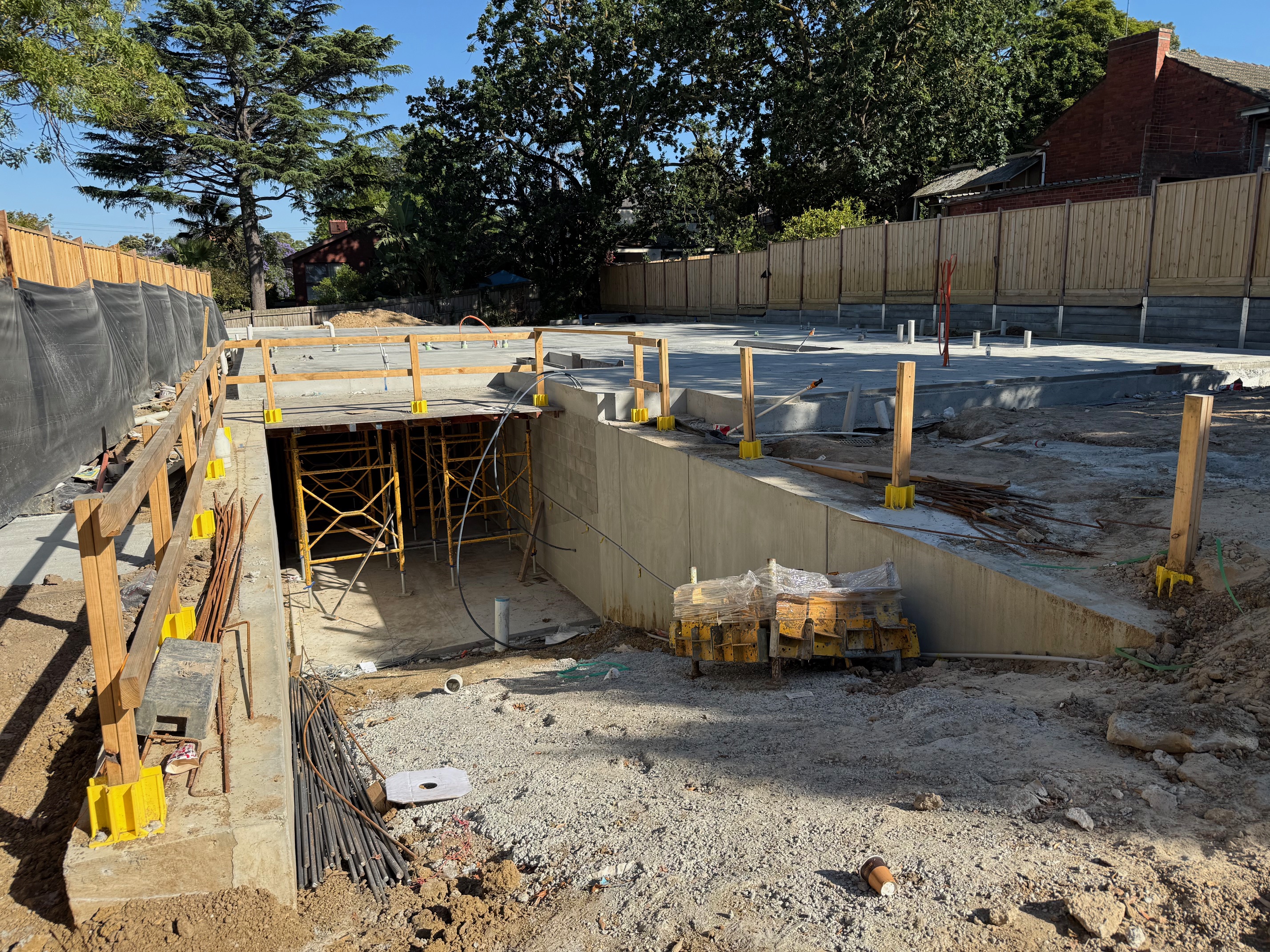
Work With Specialists Who Understand Basement Construction
If you are managing a development project that includes basement or substructure scope, contact us to discuss your project requirements.
Request a Project Consultation