Concrete Slab Construction Services
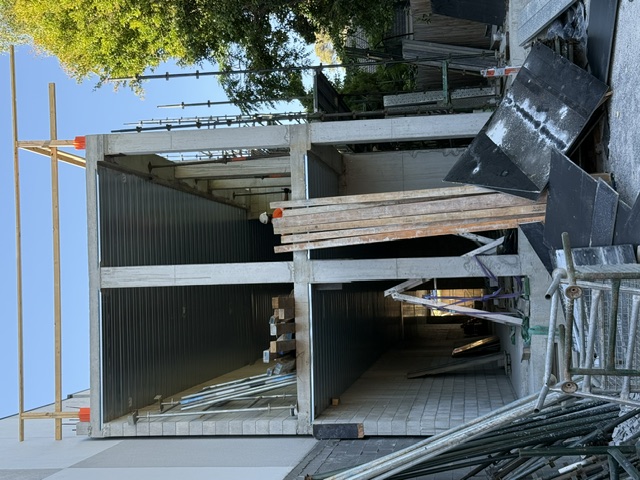
We deliver specialist concrete slab construction for basement slabs, suspended floors, and ground-level applications requiring precise dimensional accuracy, structural integrity, and durable performance across Melbourne.
Our slab construction services focus on projects where reinforcement detailing, concrete quality, formwork precision, and finishing standards are critical to structural performance and long-term durability.
Book a Project Consultation
Discuss your basement construction requirements with our specialists.
What Concrete Slab Construction Involves
Concrete slab construction is a coordinated operation involving slab design interpretation, formwork installation, reinforcement placement, concrete specification and placement, curing, and surface finishing. Slabs must be designed to resist loads without excessive deflection, cracking, or movement whilst maintaining dimensional accuracy that supports subsequent building elements.
Each slab project involves site-specific variables including slab type (basement, suspended, ground-level), load requirements, span distances, reinforcement configuration, concrete strength specifications, and exposure conditions. Basement slabs experience hydrostatic pressure and continuous moisture exposure. Suspended slabs must resist vertical loads and building vibration. Ground-level slabs must accommodate soil movement and environmental conditions. Each demands tailored construction methodology and material specifications.
Concrete slab construction also requires compliance with design specifications, Australian Standards, and building code requirements for structural adequacy, fire performance, and durability. We coordinate with structural engineers, architects, and building certifiers to ensure design intent is executed accurately on site. Slab construction requires specialist trade knowledge, precision execution, and quality discipline throughout all stages from formwork through curing and finishing.
Slab Design and Structural Considerations
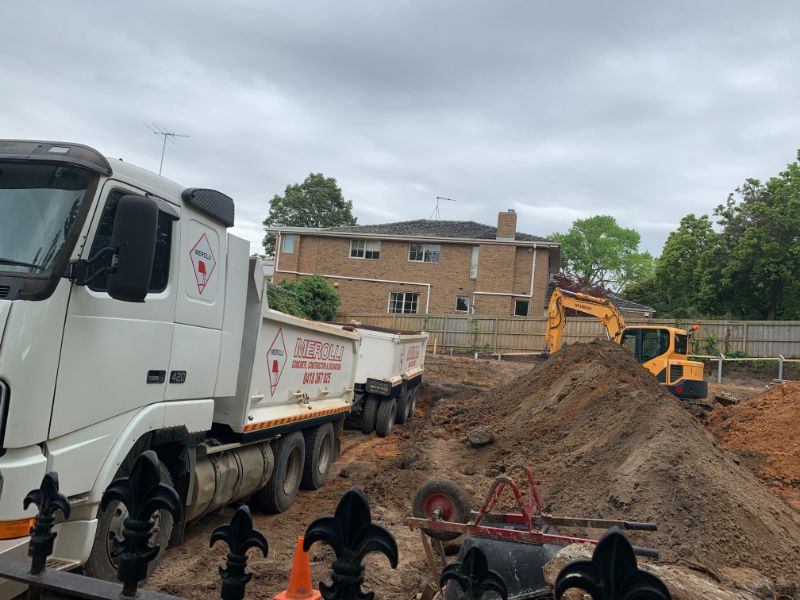
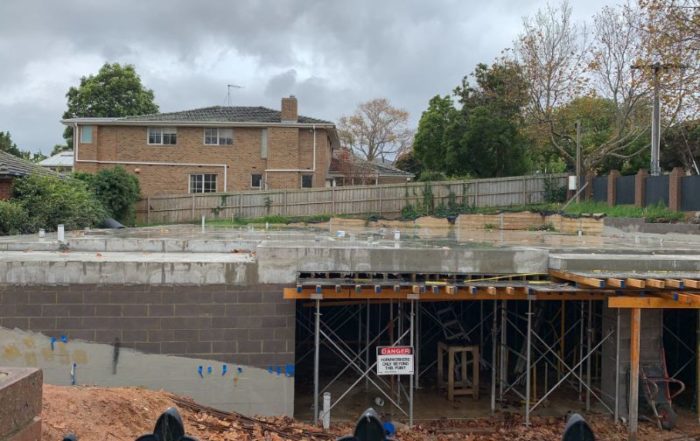
Concrete slab design involves calculating slab thickness, reinforcement detailing, support conditions, and concrete performance requirements that ensure structural adequacy under design loads. Slabs must resist bending moments, shear forces, and potentially torsion or vibration depending on application. Reinforcement provides tensile strength to resist bending, controls crack width, and prevents premature failure.
We work with structural engineers to review design documentation, identify constructability issues before mobilisation, and ensure that specified reinforcement configurations, concrete performance criteria, and slab tolerances are achievable within site constraints. Basement slabs must resist hydrostatic pressure and manage moisture ingress. Suspended slabs must be supported on columns or beams without excessive deflection. Ground-level slabs must accommodate soil movement whilst maintaining flatness and preventing cracking.
Slab design compliance includes Australian Standards AS 3600 (Concrete Structures), AS 2870 (Residential Slabs and Footings), and project-specific performance requirements. We integrate engineering requirements into our construction methodology to ensure design intent is executed accurately on site. Slab performance is determined by execution precision - poor reinforcement placement, inadequate concrete compaction, or premature loading creates structural deficiencies that compromise long-term performance.
Formwork and Slab Support Systems
Formwork systems must support concrete weight during placement, resist concrete pressure, and maintain slab flatness and alignment to dimensional specification. Inadequate formwork, undersizing of supports, or poor bracing leads to formwork deflection, surface finish defects, and dimensional inaccuracy that compromises subsequent construction stages.
We use engineered formwork systems designed for slab applications including formwork sizing calculations, temporary support specifications, and installation procedures that ensure formwork stability throughout concrete placement and curing. Formwork is checked for correct alignment, adequate bracing, and load capacity before concrete placement. Striping schedules are coordinated with concrete strength development to ensure adequate curing whilst allowing timely removal of supports.
Slab support systems must prevent deflection during concrete placement and prevent sagging that would require remediation after concrete has set. We do not accept improvised support solutions or visual approximations that compromise flatness or alignment. Formwork systems define slab geometry and surface finish - they are not temporary scaffolding that can be adjusted on site based on convenience or cost reduction.
Reinforcement Placement and Concrete Pouring
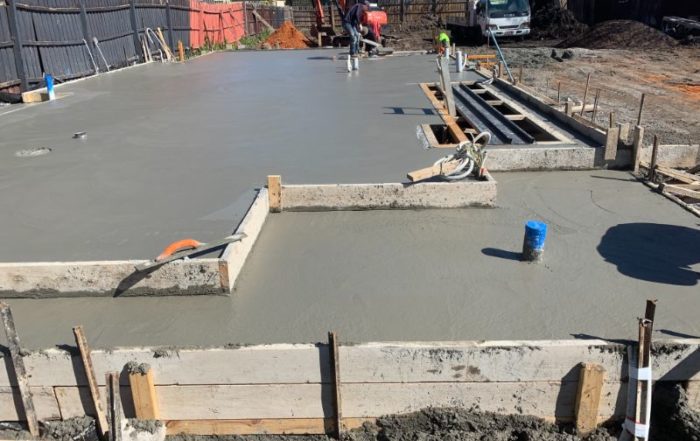
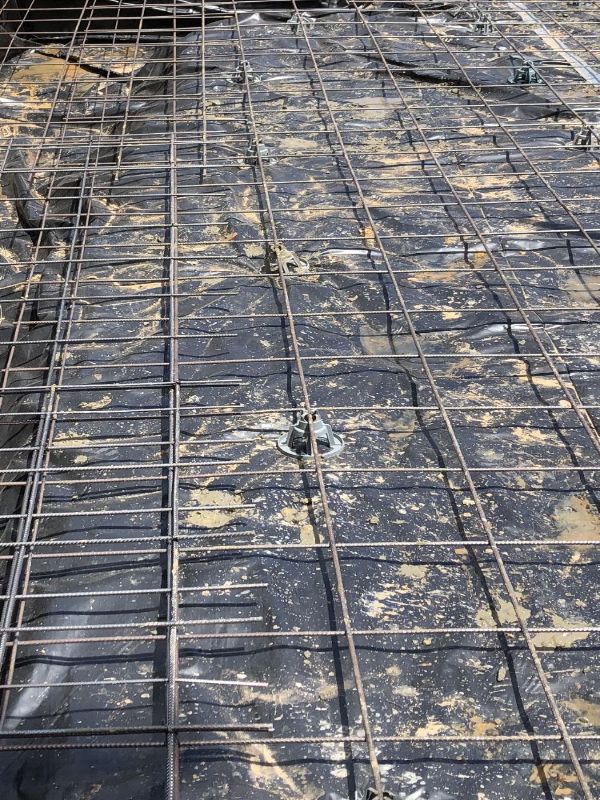
Reinforcement placement must match structural drawings exactly including bar sizing, spacing, cover requirements, and support heights that maintain design intent. Reinforcement errors are difficult to detect visually and may only become apparent when structural load is applied or cracking emerges. We place reinforcement to engineering specification - not based on trade approximations or previous project experience.
Concrete placement for slabs requires specified mix design, placement methodology, and compaction techniques that ensure full consolidation around reinforcement, eliminate air voids, and achieve design strength. Slab concrete is placed and struck off to approximate level, then screeded to final elevation using laser-controlled screeding equipment for precision flatness. Over-vibration causes segregation and surface bleed. Under-vibration creates voids and weak concrete. We execute placement with discipline to achieve both structural performance and surface quality.
Curing is critical to slab performance. We maintain adequate moisture and temperature conditions during the first 28 days after placement to allow concrete to achieve design strength and durability characteristics. Poor curing leads to surface cracking, reduced strength, and increased permeability that compromises long-term slab performance. Curing is not optional - it is a fundamental requirement for structural adequacy.
Slab Finishing and Quality Standards
Slab surface finishing involves final trowelling, brooming, or specified surface treatments that provide aesthetic appearance and functional performance including slip resistance, durability, and ease of maintenance. Basement slabs require specific treatments for moisture management. Suspended slabs require smooth, level surfaces for floor coverings or subsequent finishes.
Slab flatness is measured using precision instruments including straight edges and laser levels to ensure compliance with specification tolerances. Surface quality is assessed for colour uniformity, blowhole density, and spalling to ensure finished appearance meets design intent. We implement quality control procedures throughout slab construction including concrete testing, curing verification, and finish inspection to verify that structural and aesthetic requirements are met.
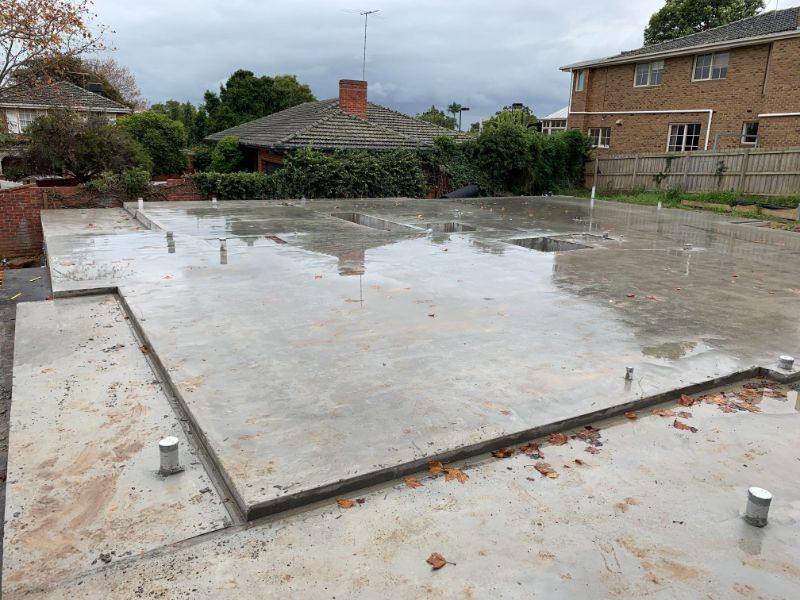
Slabs are also assessed for compliance with dimensional specification, load-bearing capacity, and durability characteristics after curing completion. We do not release slabs for loading until structural adequacy has been verified and concrete has achieved design strength. Slab construction is not completed until structural and finish quality standards have been verified and documented.
Why Choose Concrete Basements for Slab Construction
Structural Precision
Engineered reinforcement placement, formwork accuracy, and concrete specification deliver structural performance and durability.
Quality Control
Concrete testing, curing verification, and finish inspection ensure compliance with design specification and durability requirements.
Specialist Experience
Decades of slab construction experience across basement, suspended, and ground-level applications in complex Melbourne projects.
Regulatory Compliance
Design and construction compliance with Australian Standards, building codes, and certifier requirements.
Long-term Durability
Concrete specification, curing protocols, and finish treatment ensure slabs perform over decades without premature deterioration.
Execution Accountability
Direct responsibility for design translation, construction execution, and structural outcome. No subcontracting of accountability.
Ready to Discuss Your Slab Construction Project?
Contact Concrete Basements to discuss your basement slab, suspended floor, or ground-level slab construction requirements with our specialist team.
Call 0430 067 025