Basement Construction Services
We deliver specialist basement construction services for property developers and principal builders managing structurally complex, multi-level basement projects across Melbourne.
Our focus is on projects where structural integrity, water management, and compliance with Australian Standards are critical to project success and long-term performance.
Book a Project Consultation
Discuss your basement construction requirements with our specialists.
What Basement Construction Involves
Basement construction is not simply excavation followed by concrete pouring. It is a coordinated sequence of interdependent structural operations where execution quality at each stage directly determines structural performance and long-term stability. Basement construction involves managing ground conditions, groundwater pressure, retaining wall design, reinforcement detailing, formwork accuracy, concrete placement, and drainage system integration.
Each basement project introduces site-specific variables including soil classification, water table depth, proximity to neighbouring structures, access constraints, and load-bearing requirements that influence construction methodology. Unlike suspended slabs or above-ground construction, basement structures are continuously exposed to hydrostatic pressure, soil movement, and environmental conditions that demand engineered solutions and disciplined execution.
Basement construction also involves regulatory compliance with structural design standards, excavation safety protocols, and building code specifications that govern below-ground habitable spaces. We coordinate with structural engineers, geotechnical consultants, building surveyors, and certifiers to ensure design intent is translated into compliant, executed construction outcomes. Basement construction requires specialist trade knowledge - not volume trade capability scaled down to below-ground conditions.
Structural Design and Engineering Considerations
Basement structures must be designed to resist lateral earth pressure, hydrostatic loading, and vertical building loads while maintaining dimensional stability. Structural design for basement construction includes retaining wall specification, slab thickness and reinforcement detailing, pile or footing design where required, and load transfer mechanisms that distribute building weight to competent bearing strata.
We work with structural engineers to review design documentation, identify constructability issues before mobilisation, and ensure that specified materials, reinforcement configurations, and concrete performance criteria are achievable within site constraints. Engineering assumptions regarding ground conditions, water table behaviour, and access logistics are tested against site reality - and where discrepancies emerge, we coordinate design revisions to maintain structural performance without introducing execution risk.
Structural design for basements also involves compliance with Australian Standards including AS 3600 (Concrete Structures), AS 2870 (Residential Slabs and Footings), and AS 4678 (Earth-Retaining Structures). We integrate engineering requirements into our construction methodology to ensure that design intent is executed accurately on site. Poor translation between design and construction creates structural deficiencies that are difficult to remediate once concrete is placed and cured. We treat engineering documentation as binding instruction - not as advisory guidance subject to on-site modification.
Excavation for Basement Construction
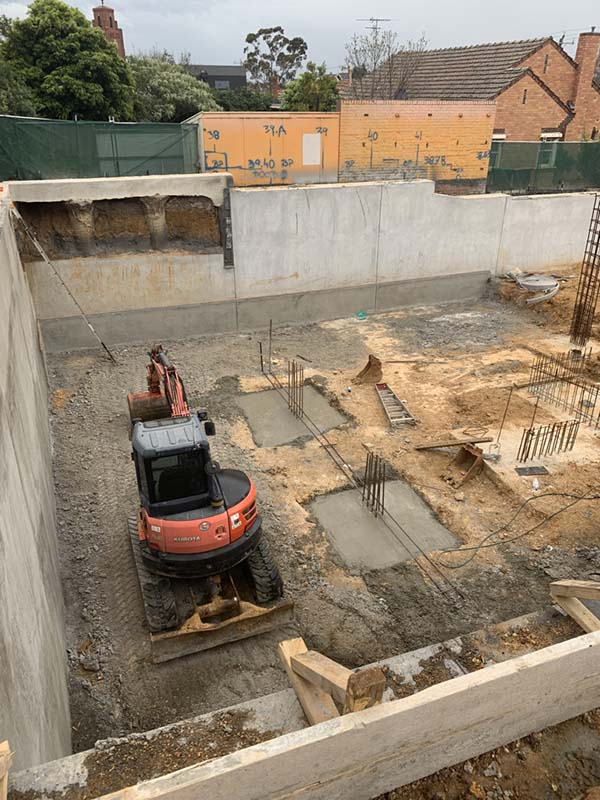
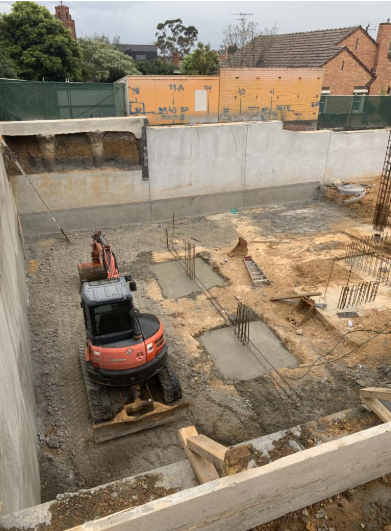
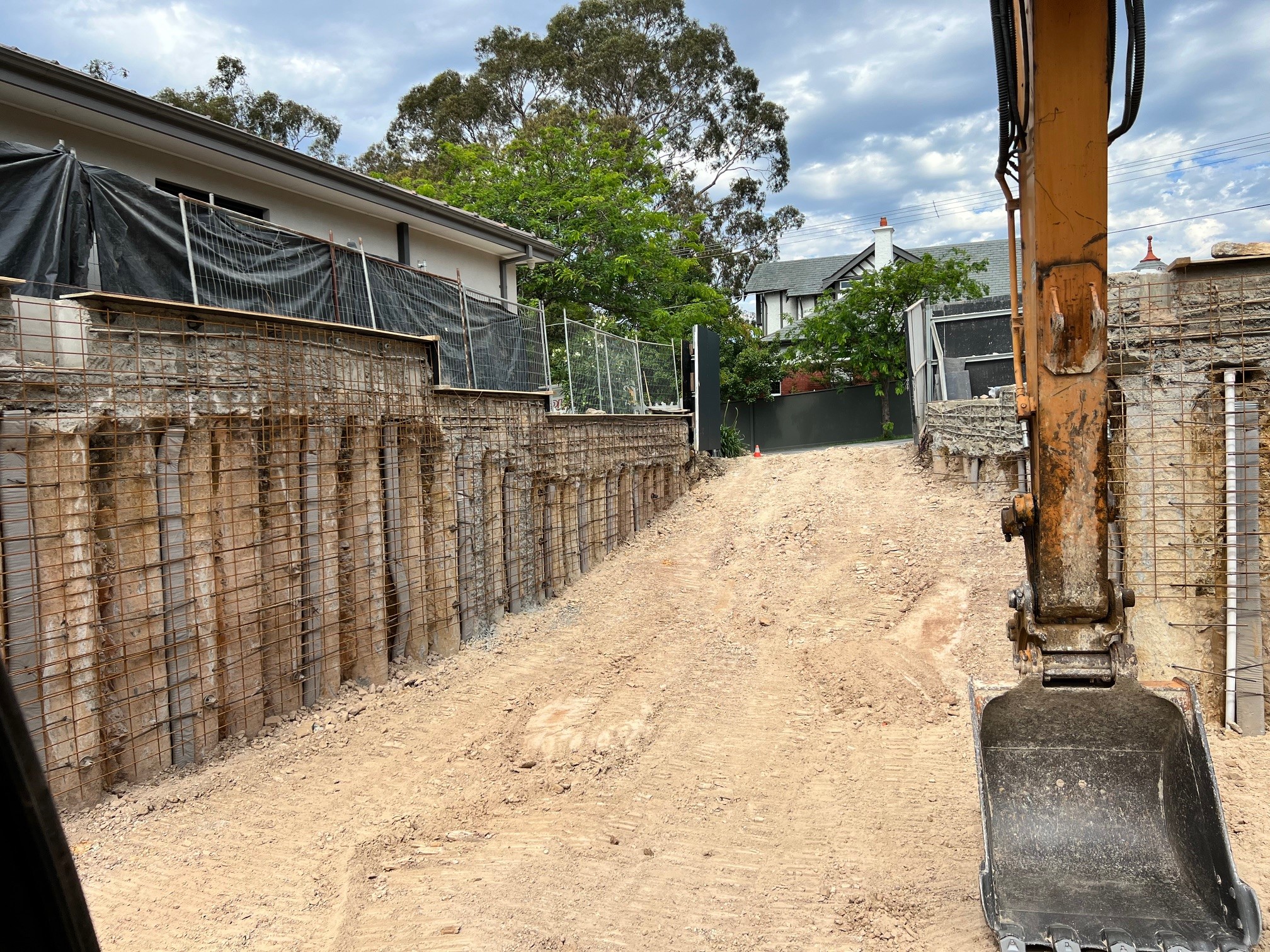
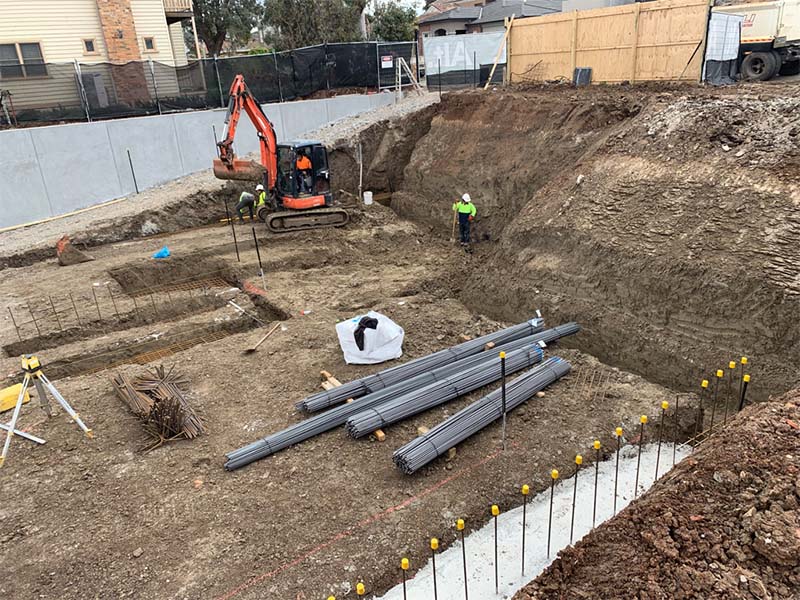
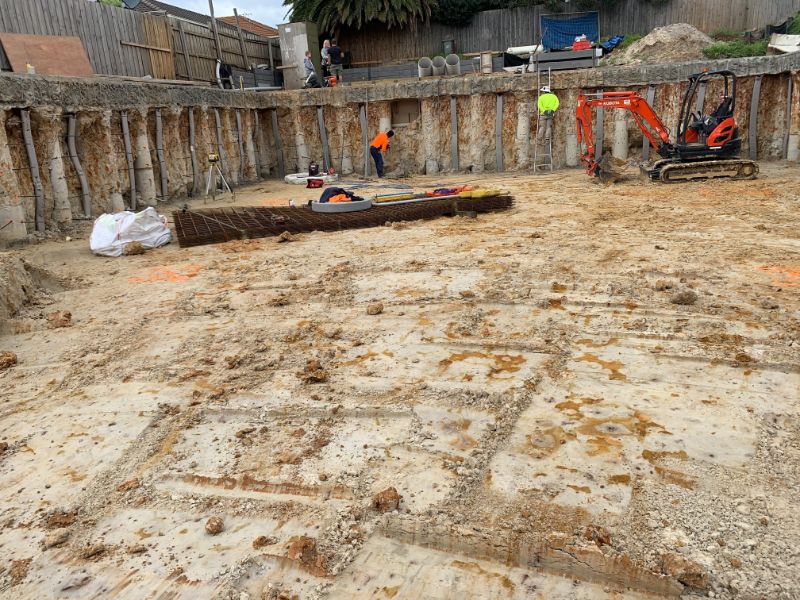
Excavation for basement construction involves removing soil to design depth while maintaining side stability, managing groundwater ingress, and protecting adjacent structures from settlement or movement. Deep excavation introduces risk - particularly in urban environments where neighbouring buildings, underground services, and property boundaries constrain excavation methodology and impose strict tolerances on ground movement.
We manage excavation sequencing, shoring installation where required, dewatering systems to control groundwater levels, and spoil removal logistics that comply with site access restrictions and council requirements. Our excavation methodology is informed by geotechnical site investigation data including soil classification, bearing capacity, groundwater depth, and rock hardness. Where ground conditions differ from geotechnical predictions - as they frequently do - we adjust excavation techniques in real time to maintain safety and structural integrity.
Excavation execution also determines the accuracy of subsequent construction stages. If excavation tolerances are not maintained, retaining walls cannot be constructed to design alignment, formwork cannot be positioned accurately, and reinforcement placement becomes compromised. Poor excavation creates cascading rework that delays project timelines and increases cost. We approach excavation as a precision operation - not as bulk earthworks scaled down to basement dimensions.
Reinforcement and Formwork
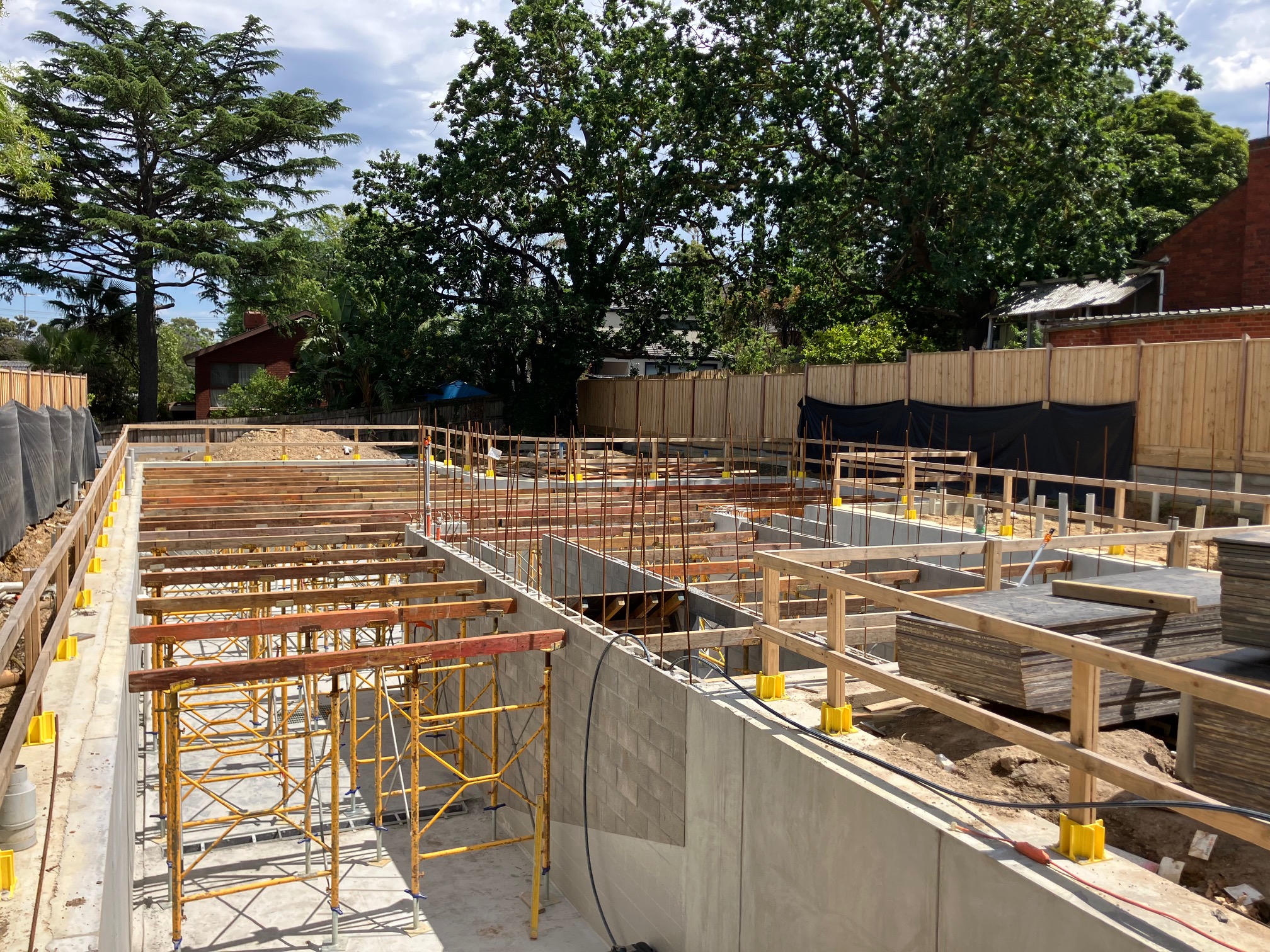
Reinforcement detailing and formwork accuracy are non-negotiable requirements for basement construction. Reinforcement provides tensile strength to concrete structures that would otherwise fail under lateral pressure, bending loads, or thermal movement. Formwork defines dimensional tolerances, surface finish, and structural geometry. Both must be executed to engineering specification - not approximated based on trade convention or cost reduction priorities.
We place reinforcement to match structural drawings including bar sizing, spacing, cover requirements, lap lengths, and tying configurations that prevent displacement during concrete placement. Our reinforcement crews are trained to read engineering documentation and understand the structural purpose of each reinforcement element - not simply replicate previous projects. Reinforcement errors are difficult to detect visually once concrete is poured and may only become apparent when structural load is applied or cracking emerges months after completion.
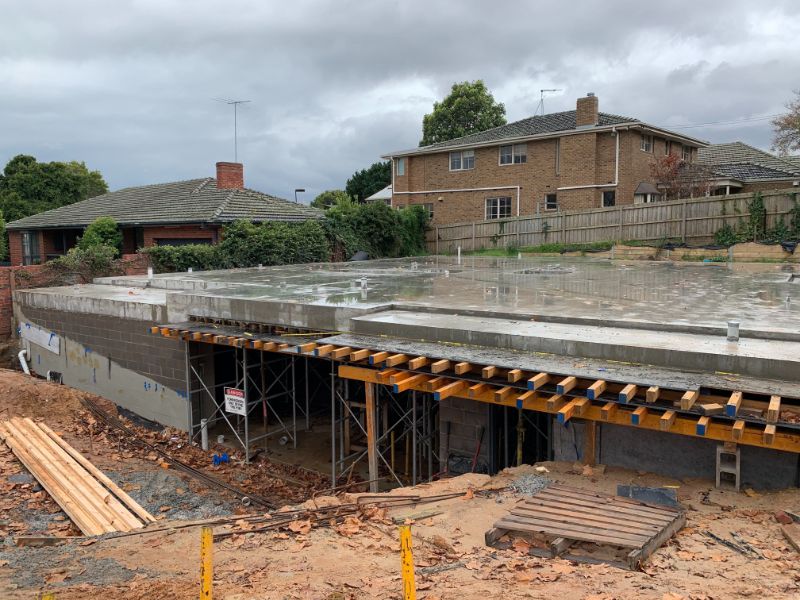
Formwork systems must resist concrete pressure during placement without deflection, blowout, or misalignment. We use engineered formwork systems designed for basement applications including retaining walls, slabs, columns, and transfer beams. Formwork is braced, aligned, and inspected before concrete placement. We do not accept improvised formwork solutions or visual approximations that compromise dimensional accuracy. Formwork defines structural outcomes - it is not temporary scaffolding that can be adjusted on site based on convenience.
Concrete Pouring and Curing
Concrete placement for basement construction requires coordination of mix design, pour sequencing, placement methodology, compaction techniques, and curing protocols that ensure structural performance and durability. Basement concrete is exposed to continuous moisture, hydrostatic pressure, and ground movement - conditions that demand specific concrete performance characteristics including appropriate strength, low permeability, and resistance to sulfate attack and alkali-silica reaction.
We specify concrete mixes designed for basement applications including appropriate cement content, water-cement ratios, admixtures for workability, and aggregate sizing suited to high-density reinforcement configurations. Pour sequencing is planned to minimise cold joints, prevent segregation, and ensure continuous placement in critical structural zones. Concrete compaction is executed using mechanical vibration to eliminate voids and achieve full consolidation around reinforcement without over-vibration that causes segregation or bleeding.
Curing is the process of maintaining adequate moisture and temperature conditions to allow concrete to achieve design strength and impermeability. Poor curing leads to surface cracking, reduced strength, and increased permeability. We implement curing protocols including moisture retention methods, temperature monitoring, and time-based curing durations that align with Australian Standards and engineering specifications. Concrete performance is determined during the first 28 days after placement - shortcuts during this period create permanent structural deficiencies.
Drainage and Ground Water Management
Managing groundwater and drainage is a critical component of basement construction. Basement structures are continuously exposed to groundwater pressure and must manage water management effectively to maintain habitability and prevent structural deterioration. Drainage systems are not an afterthought - they must be designed, detailed, and coordinated with structural works from the beginning.
We install drainage systems designed for below-ground applications including perimeter drainage around retaining walls, under-slab drainage to manage hydrostatic pressure, and sump systems for active water removal. Drainage installation must occur at the correct stage of construction - integrated with structural works and before backfilling or load application.
Properly designed drainage systems redirect groundwater away from basement structures, reducing hydrostatic pressure and preventing water accumulation. We coordinate drainage installation with structural engineers and building designers to ensure both systems work together as intended. Drainage failures typically emerge during periods of sustained rainfall or seasonal water table rise - conditions that expose inadequate system capacity or poor installation quality.
We understand that effective drainage is essential for basement longevity. A drainage system must function reliably for the life of the structure. Drainage is structural protection - not an optional upgrade applied at the end of construction.
Basement Construction for Residential and Development Projects
Basement construction is increasingly specified for high-density residential developments, multi-level townhouses, luxury residential projects, and mixed-use developments where land value justifies maximising site yield through below-ground construction. Basements provide car parking, storage, plant rooms, and additional habitable space without increasing building footprint or height restrictions.
Residential basement construction introduces specific challenges including confined urban sites, proximity to neighbouring structures, noise and vibration restrictions, and access limitations that constrain plant movement and material delivery. We manage residential basement projects with awareness of these constraints and coordinate construction methodology to minimise disruption to neighbouring properties while maintaining execution quality and safety compliance.
Development projects typically involve multiple basement levels, complex structural interfaces, and integration with above-ground construction programs. We coordinate basement construction timelines with broader project schedules to ensure basement completion does not delay superstructure commencement. Poor basement execution creates program delays that cascade through the entire development timeline and erode project feasibility. We deliver basement construction services designed for developers and builders who understand the structural and financial consequences of execution failure.
Commercial basement projects including basement car parks, retail basements, and plant room facilities require larger floor areas, higher load-bearing capacity, and fire-rated construction that differs from residential specifications. We coordinate basement construction for commercial developments including reinforcement detailing for heavy loads, vehicle circulation planning, ramp gradients, and compliance with accessibility and fire safety requirements.
Mixed-use developments combine residential, commercial, and retail uses within a single structure and often include multi-level basements that serve multiple functional zones. These projects require careful coordination of basement construction with structural design, services installation, and staged handover requirements. We work with project managers, architects, and services consultants to ensure basement construction supports the intended use of the development without introducing constructability issues or post-completion defects.
Basement construction for development projects is not a commodity service. It requires specialist trade capability, engineering coordination, and execution discipline that extends beyond standard concrete construction. We deliver basement construction services designed for developers and builders who understand the structural and financial consequences of execution failure.
Why Specialist Basement Builders Matter
Basement construction is not a standard trade discipline. It requires understanding of geotechnical behaviour, structural loading, and below-ground construction risks that most general contractors do not encounter regularly. Inexperienced contractors introduce execution risks including ground instability, inadequate reinforcement, structural deficiencies, and costly remediation works.
Specialist basement builders bring technical capability, crew experience, and execution discipline to complex basement environments. We understand formwork systems designed for retaining walls. We manage excavation sequencing in variable ground conditions. We place reinforcement to engineering tolerances that ensure structural performance.
Structural shortcuts create drainage failures that compromise structural durability. Poor excavation creates foundation instability that leads to cracking and settlement. Inadequate curing compromises concrete strength and long-term integrity. These are not theoretical risks—they are common failure modes observed in basement projects managed by contractors without specialist capability.
Basement construction failures are not caused by unpredictable events. They are caused by execution shortcomings, poor planning, rushed timelines, inexperienced crews, and contractors who treat basement work as a volume trade. The structural and financial consequences of basement failures are severe - delays, structural repair, building damage, and litigation. These are not rare risks - they are common failure modes observed in basement projects managed by contractors without specialist capability.
Structural Design Coordination
We review engineering documentation and coordinate with structural engineers to ensure design intent is achievable within site constraints.
Reinforcement Precision
Reinforcement is placed to match structural drawings including bar sizing, spacing, cover requirements, and lap lengths.
Pour Planning and Execution
Concrete placement is sequenced to minimise cold joints, ensure compaction, and maintain structural continuity across critical zones.
Ground Water Management
Drainage systems and dewatering strategies are coordinated with structural works to manage groundwater pressure and prevent water ingress.
Quality Control
We implement inspection protocols including pre-pour checks, concrete testing, and post-pour monitoring to ensure compliance with specifications.
Safety and Compliance
All works are executed in accordance with Australian Standards, Work Health and Safety regulations, and building code requirements.
Book a Basement Construction Consultation
If you are a property developer or principal builder managing a basement project that requires specialist construction capability, contact us to discuss your project requirements, site conditions, and execution methodology.