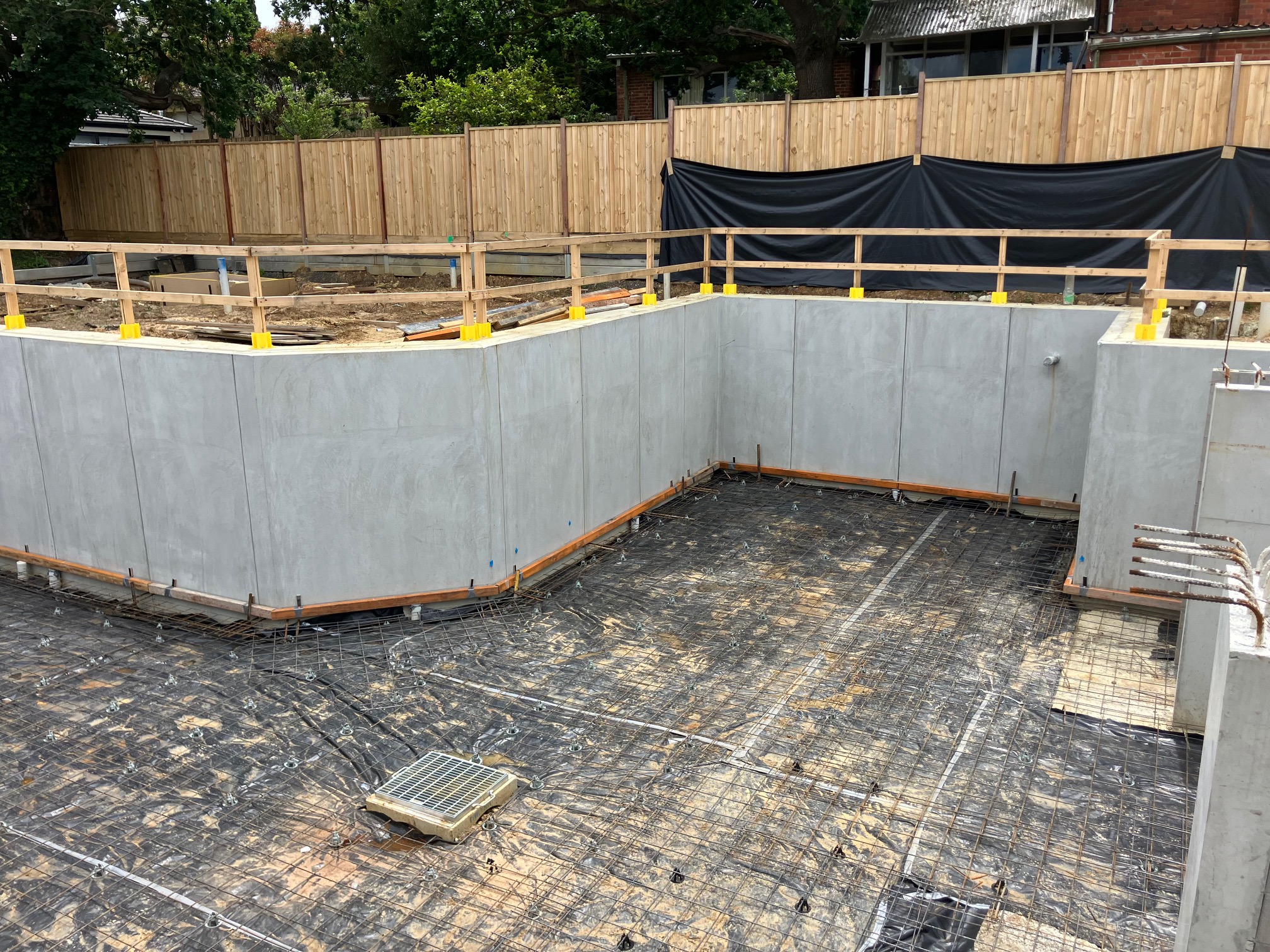
Structural Formwork for Basement Construction
We design, fabricate, and install structural formwork systems for basement walls, suspended slabs, columns, and retaining structures that demand dimensional accuracy and structural integrity.
Our formwork solutions support complex basement geometry, tight construction programmes, and projects where concrete finish quality and dimensional tolerance are critical.
Book a Project Consultation
Discuss your basement construction requirements with our specialists.
Purpose-Built Formwork Systems
Structural formwork is not generic shuttering—it is a load-bearing temporary structure designed to withstand concrete placement pressures, maintain dimensional accuracy during curing, and support construction loads including workers, equipment, and material storage until concrete achieves design strength. Basement formwork systems must accommodate lateral concrete pressure from deep wall pours, resist deflection that would compromise dimensional tolerances, and provide safe working platforms for steel fixing, concrete placement, and finishing operations.
We specify formwork systems appropriate to project scale, structural complexity, and construction program including modular panel systems for repetitive basement walls, purpose-built timber or steel formwork for complex geometries, and climbing formwork systems for multi-level basement cores or lift shafts. Panel formwork including Peri, Doka, or Acrow systems provides dimensional consistency across large wall areas, reduces formwork erection time, and allows multiple reuses across basement levels. Custom timber formwork is fabricated for non-standard geometries including curved walls, tapered sections, or architectural features requiring precise dimensional control.
Formwork design considers concrete placement method including pump rates, pour height, and concrete slump which determine lateral pressure loads on formwork panels and support structures. Deep basement walls poured in single lifts generate higher lateral pressures than staged pours due to hydrostatic head of fluid concrete. We design formwork support systems including walers, strongbacks, and bracing to resist these pressures without deflection, buckling, or formwork blowout that would compromise concrete quality or construction safety.
Formwork must also accommodate embedded services including drainage channels, penetrations for mechanical and electrical services, and fixing systems for architectural cladding or facade supports. Penetrations through formwork for service conduits or blockouts must maintain concrete confinement, prevent grout loss during concrete placement, and provide adequate clearance for concrete flow around congested reinforcement zones. We coordinate formwork design with services documentation to ensure penetrations are accurately positioned and do not compromise structural capacity.
Reinforcement Integration
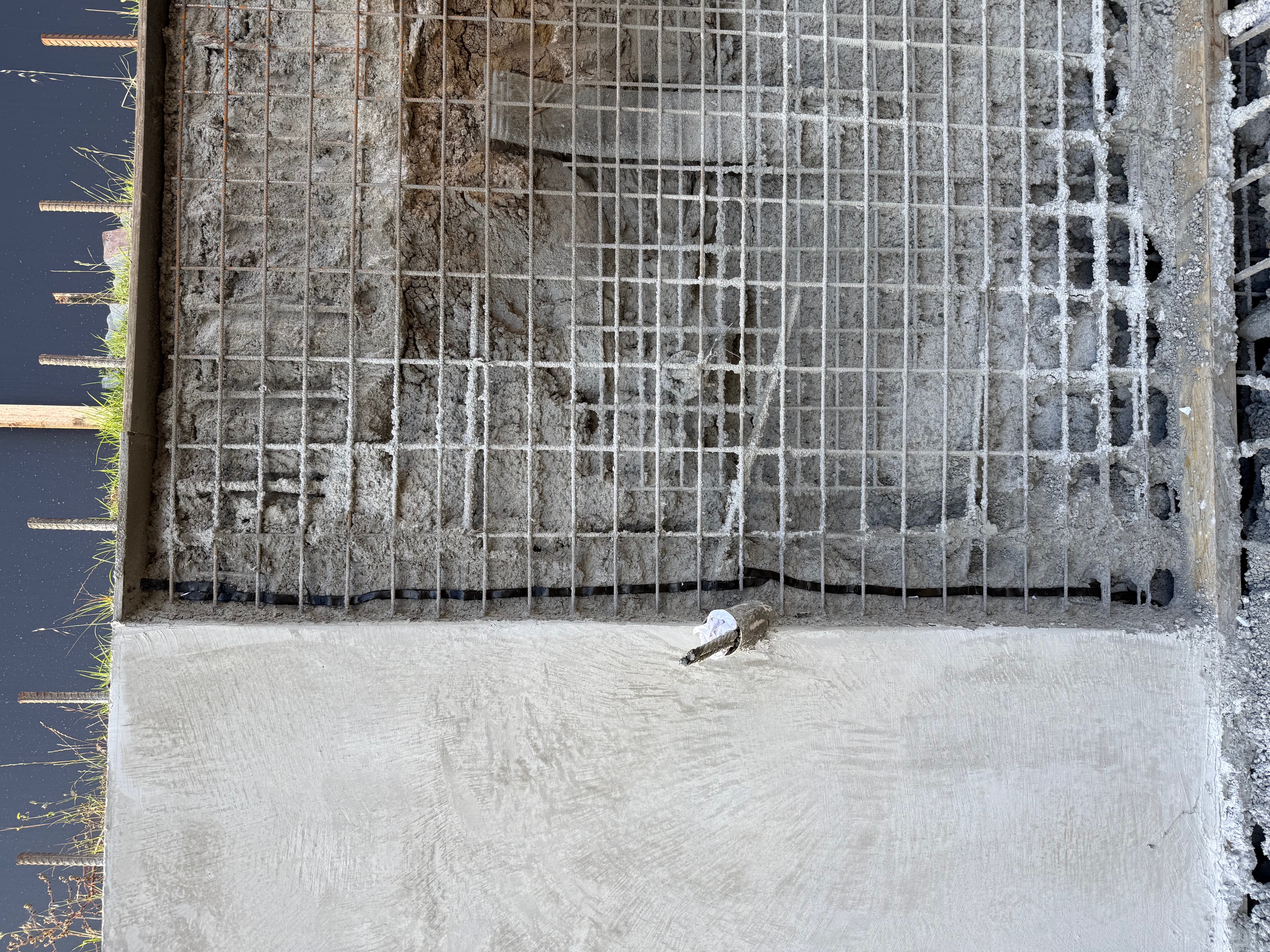
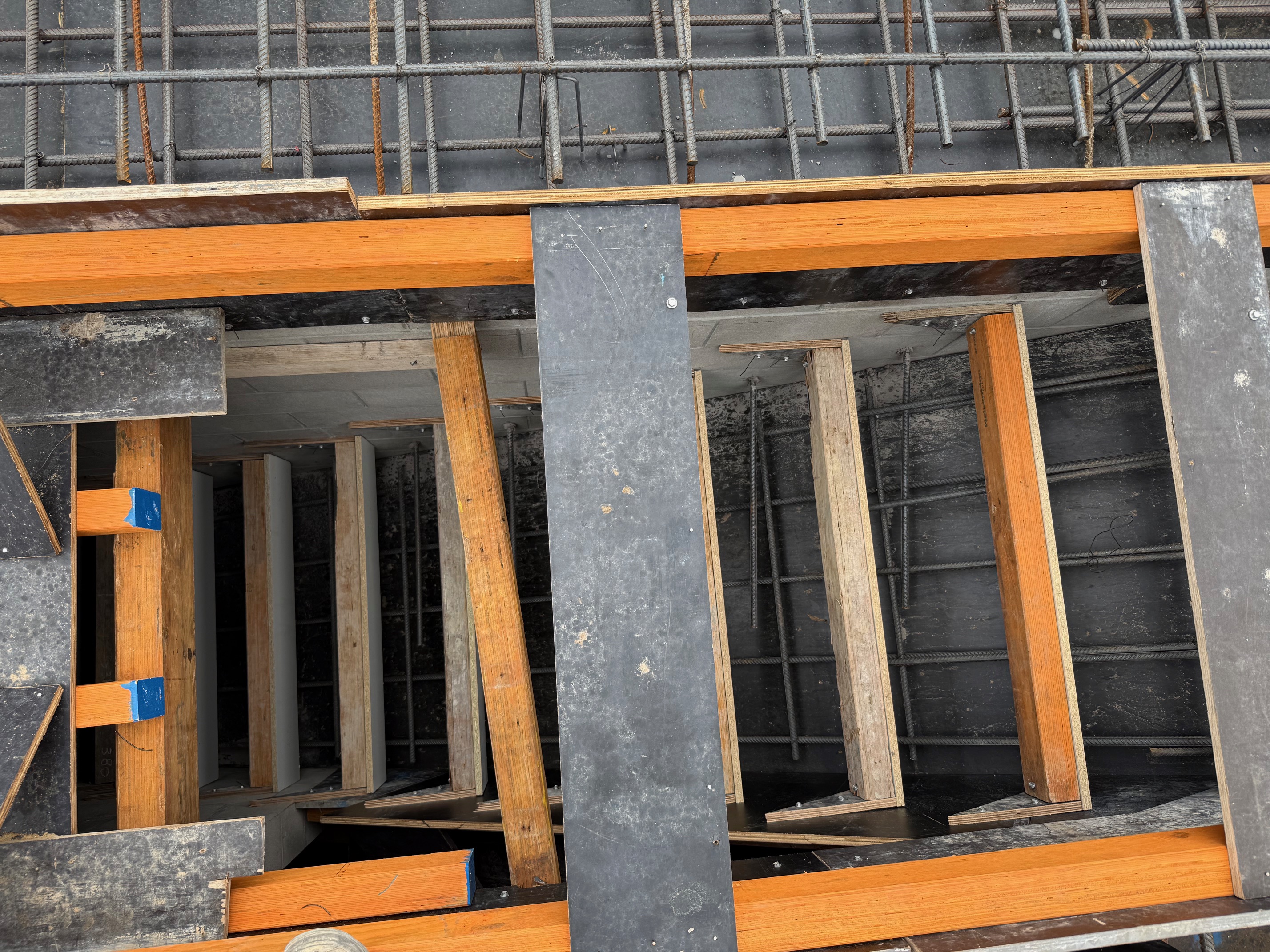
Formwork installation is coordinated with reinforcement fixing to ensure reinforcement cages are correctly positioned, adequately supported, and maintain specified concrete cover during concrete placement. Reinforcement for basement walls includes vertical starter bars projecting from basement slabs or pile caps, horizontal distribution steel tied to vertical bars, and shear reinforcement around openings or concentrated load points. Reinforcement must remain stable during formwork erection, concrete placement, and vibration operations without displacement that would compromise structural capacity or durability.
We install formwork spacers, chairs, and cover blocks to maintain reinforcement position relative to formwork faces and ensure minimum cover requirements are achieved for durability and fire resistance. Concrete cover requirements for basement structures exposed to groundwater, aggressive soils, or de-icing salts are typically 50mm to 75mm depending on exposure classification and design life expectations. Inadequate cover results in early corrosion of reinforcement, structural degradation, and reduced service life that may require costly remediation including concrete repair, cathodic protection, or structural strengthening.
Formwork ties passing through basement walls create potential water paths through the concrete section and must be detailed to prevent groundwater ingress. We use cone ties, snap ties, or proprietary water-stop tie systems that incorporate waterbars, hydrophilic gaskets, or cone plugs to seal tie penetrations. Tie holes on external basement wall faces are sealed with non-shrink grout or epoxy mortar and inspected to ensure structural integrity. Improperly sealed tie holes are the most common cause of minor water seepage in basement walls and must be addressed before final completion.
Formwork for suspended basement slabs or transfer structures includes soffit formwork supported by props, beams, or falsework systems designed to support dead loads from concrete, live loads from workers and equipment, and impact loads from concrete placement operations. Soffit formwork must remain in place until concrete achieves adequate strength for prop removal—typically 70% of design strength for conventional concrete or as specified in structural documentation. Premature formwork stripping causes slab deflection, cracking, or structural collapse and represents a major safety risk in basement construction environments.
Accuracy and Structural Integrity
Dimensional accuracy in formwork directly determines the dimensional accuracy of finished concrete structures. Basement construction tolerances are typically specified as ±10mm for wall verticality over 3 metres height, ±5mm for wall thickness variations, and ±20mm for plan position of structural elements. These tolerances affect facade installation, waterproofing continuity, and coordination with upper building levels where basement walls form primary structure supporting building superstructure loads.
We survey formwork position before concrete placement to verify alignment with structural grid, verticality within specified tolerances, and correct spacing between formwork faces. Formwork misalignment discovered after concrete placement creates rework including concrete removal, wall reconstruction, or structural modifications to accommodate dimensional variations. Survey control for basement structures requires establishment of grid control points protected from construction activity, regular verification of formwork position during installation, and as-built surveys following formwork stripping to document actual dimensions for coordination with subsequent trades.
Structural integrity of formwork systems is verified through design calculations prepared by competent persons including structural engineers or formwork suppliers holding design authority for proprietary systems. Formwork design calculations consider concrete placement rate, concrete density, placement temperature affecting concrete setting time, and use of retarding admixtures that extend the period of maximum lateral pressure. We do not install formwork without design verification— formwork failures cause injury, structural damage, and construction delays that far exceed the cost of proper design and verification.
Quality control during formwork installation includes inspection of bracing connections, verification of formwork tie spacing and capacity, checking formwork cleanliness and release agent application, and final survey before concrete placement approval. Formwork defects including damaged panels, loose connections, inadequate bracing, or contamination with soil, oil, or previous concrete residue are rectified before concrete placement commences. Concrete placed into defective formwork results in surface defects, dimensional errors, or formwork failure requiring emergency response, concrete demolition, and project delays.
Formwork for Complex Basement Builds
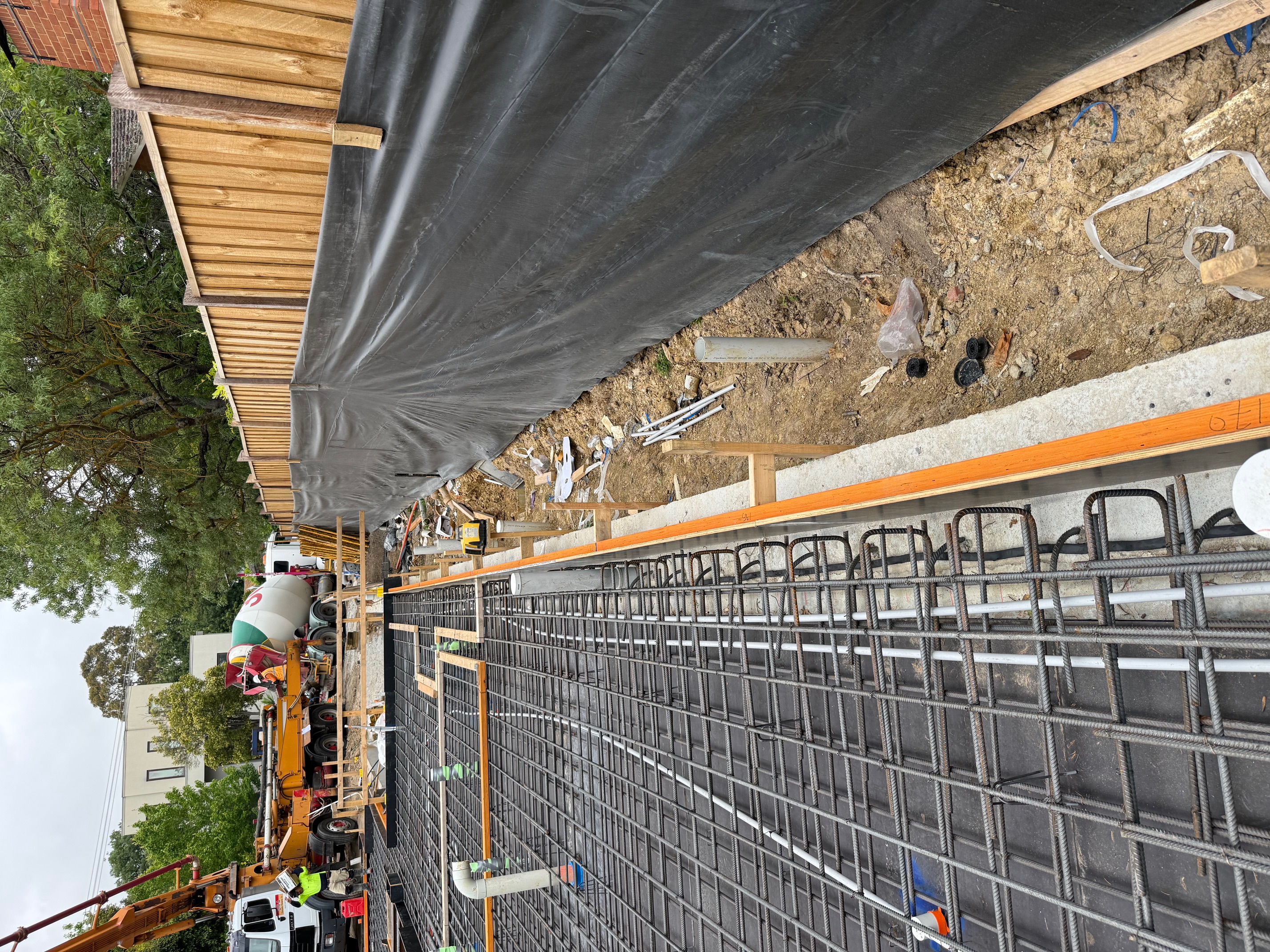
Complex basement projects introduce formwork challenges including installation in confined excavations with limited crane access, coordination with temporary shoring systems supporting excavation faces, and sequencing with drainage and surface preparation where proper groundwork must occur before formwork or protected during formwork operations. Multi-level basements require formwork systems that accommodate construction joints between basement levels, provide access for construction traffic, and allow concurrent work on multiple basement levels to maintain construction program efficiency.
We execute formwork for basement car parks including ramp formwork with variable gradients, suspended slab formwork spanning between basement columns, and edge formwork integrating with perimeter retaining walls. Car park formwork must accommodate traffic loads during construction, provide adequate strength for early formwork stripping to maintain construction program, and integrate with post-tensioning systems where specified for slab construction. Formwork for post-tensioned slabs includes provision for tendon ducts, anchorage zones requiring increased concrete cover, and sequencing to allow tendon stressing before formwork removal.
Residential basement formwork includes single-level basement construction under existing homes where formwork is installed in restricted headroom conditions, underpinning formwork supporting existing foundations during basement excavation beneath, and formwork for basement additions requiring connection to existing structures through dowels, chemical anchors, or reinforcement lap splices. Residential formwork also accommodates architectural finishes including off-form concrete where formwork surface finish directly determines concrete appearance, expressed concrete requiring fine-tolerance formwork alignment, and feature walls or columns requiring special formwork treatments.
Commercial and high-rise basement formwork systems are designed for rapid formwork cycling including early-strength concrete mixes allowing formwork stripping within 12 to 24 hours, flying formwork systems for repetitive floor plates, and self-climbing formwork for basement cores or service shafts extending through multiple basement levels. These systems reduce construction program duration, improve construction safety by reducing manual handling and working at height, and provide consistent concrete quality through controlled formwork geometry and surface finish. We coordinate formwork design with construction sequencing, concrete supply logistics, and project program requirements to deliver basement structures within contractual timeframes without compromising structural quality or construction safety.
Engage Formwork Specialists for Basement Construction
Structural formwork for basement construction determines dimensional accuracy, construction program efficiency, and long-term structural performance. If your basement project requires purpose-built formwork systems, complex geometric detailing, or formwork coordination with temporary works and services, contact us to discuss your formwork requirements.