Excavation Services for Basement Construction
We provide professional excavation services for basement construction, structural concrete projects, and below-ground development works across Melbourne.
Our excavation capability includes bulk earth removal, rock excavation, site preparation, and confined access excavation for challenging urban sites.
Book a Project Consultation
Discuss your basement construction requirements with our specialists.
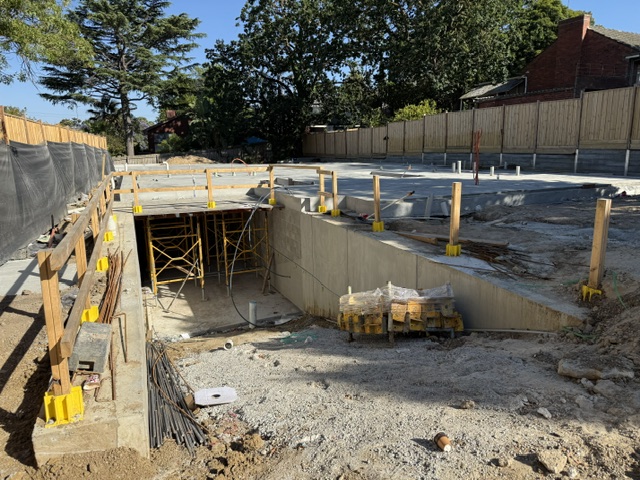
Bulk Excavation for Basements
Bulk excavation for basement construction involves removing large volumes of soil to design depth while maintaining excavation stability, managing groundwater, and protecting adjacent structures from settlement or lateral movement. Bulk excavation is not simply digging a hole—it requires coordinated sequencing, ground stability assessment, dewatering systems where water tables are present, and spoil removal logistics that comply with site access constraints and environmental regulations.
We execute bulk excavation using excavators, bobcats, and tipper trucks sized appropriately for site access conditions and soil volumes. Excavation depth, soil classification, and proximity to neighbouring structures determine excavation methodology including batter slopes, temporary shoring requirements, and excavation staging to prevent ground movement. Bulk excavation for multi-level basements may require staged excavation where upper levels are excavated, retaining structures installed, and lower levels then excavated in sequence to maintain ground stability.
Our bulk excavation service includes excavation to design depth and tolerance, removal of unsuitable material including rock, clay, or contaminated soil, coordination with geotechnical engineers where ground conditions differ from site investigation predictions, and dewatering systems to control groundwater ingress during excavation. We do not commence bulk excavation without geotechnical data, structural engineering documentation, and confirmed access approvals. Poor planning at the excavation stage creates cascading issues including foundation settlement, waterproofing failure, and structural misalignment that are difficult and expensive to remediate.
Bulk excavation also involves coordination with utility providers to locate and protect underground services including water, sewer, gas, electricity, and telecommunications infrastructure. We conduct dial-before-you-dig searches, physically mark service locations, and use vacuum excavation or hand digging where services are present within excavation zones. Service damage creates project delays, safety hazards, and financial liability. We treat bulk excavation as a precision operation—not as earthworks executed with maximum speed and minimal planning.
Detailed Excavation in Confined Sites
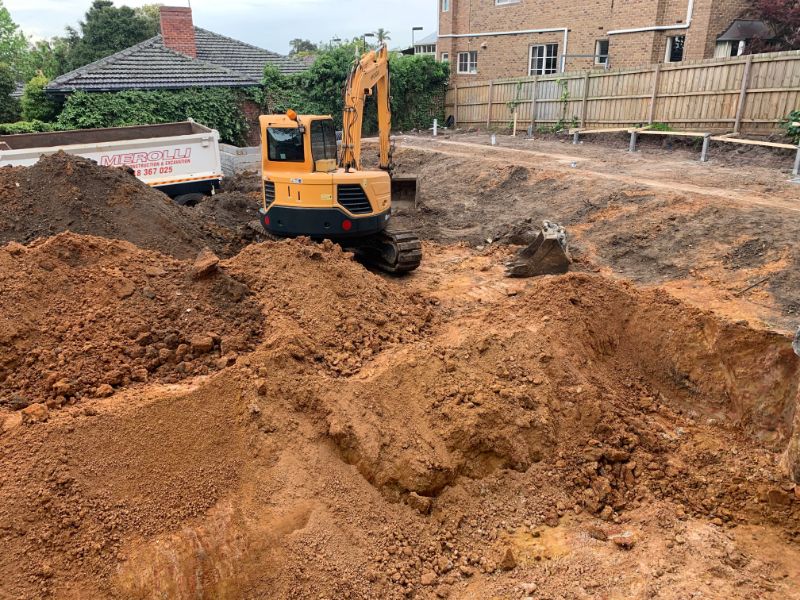
Detailed excavation in confined sites involves precision excavation operations in restricted access environments where standard excavation plant cannot be deployed, where neighbouring structures impose strict tolerances on ground movement, or where excavation must occur around existing foundations, piles, or underground infrastructure. Confined site excavation requires smaller plant, hand excavation where required, continuous monitoring of adjacent structures, and real-time adjustment to ground conditions that differ from design assumptions.
Urban basement projects frequently involve confined site conditions including narrow site boundaries, limited vehicular access, proximity to neighbouring buildings within metres of excavation zones, and underground services that cannot be relocated. We manage detailed excavation using compact excavators, mini-loaders, vacuum excavation systems, and hand digging where mechanical excavation creates unacceptable risk. Spoil removal from confined sites may require skip bins, conveyor systems, or manual handling depending on access constraints and council approvals.
Detailed excavation also includes trimming excavation batters to final design profiles, excavating foundation zones to specified bearing levels, creating drainage falls and sumps for groundwater management, and excavating service trenches for plumbing, electrical conduits, and drainage infrastructure within basement footprints. Excavation tolerances for detailed works are tighter than bulk excavation—typically within 25mm to 50mm of design levels to ensure formwork, reinforcement, and concrete placement can proceed without rework or dimensional adjustment.
We use laser levels, GPS-guided excavation systems, and surveying controls to maintain excavation accuracy in detailed operations. Over-excavation creates additional backfill requirements, increases concrete volumes, and introduces structural uncertainty. Under-excavation prevents proper formwork installation and creates issues with slab thickness, cover to reinforcement, and finished floor levels. Detailed excavation is executed to engineering tolerance—not approximated based on visual assessment or operator experience.
Ground Preparation and Soil Management
Ground preparation following excavation involves creating stable, compacted bearing surfaces suitable for structural foundations, ensuring adequate drainage to prevent water accumulation, and managing soil conditions that may compromise structural performance including expansive clays, soft soils, or contaminated material. Ground preparation is the interface between excavation and structural works—poor preparation creates long-term settlement, cracking, and waterproofing failure.
We execute ground preparation including removal of loose or disturbed material from excavation bases, compaction of bearing surfaces to specified density using plate compactors or vibrating rollers, installation of crushed rock or sand layers where ground improvement is required, and verification of bearing capacity through visual inspection or testing by geotechnical consultants. Ground preparation standards are specified in structural documentation and must be achieved before concrete placement or formwork installation commences.
Soil management involves classifying excavated material, segregating reusable fill from waste material, stockpiling soil for later backfilling operations, and disposing of contaminated, unsuitable, or excess soil in compliance with EPA regulations and waste classification requirements. Soil disposal is a significant cost component in basement projects—particularly where contaminated soil or acid sulfate soils are present that require treatment or disposal at licensed facilities.
We coordinate with environmental consultants where soil contamination is suspected or identified during excavation, conduct soil testing to classify material for disposal, and maintain documentation including waste dockets and EPA reporting where required. Soil management also includes erosion and sediment control measures to prevent soil discharge from site during excavation, compliance with stormwater management requirements, and dust suppression protocols for excavation operations in urban environments. Poor soil management creates regulatory non-compliance, environmental damage, and financial penalties.
Excavation Safety and Risk Control
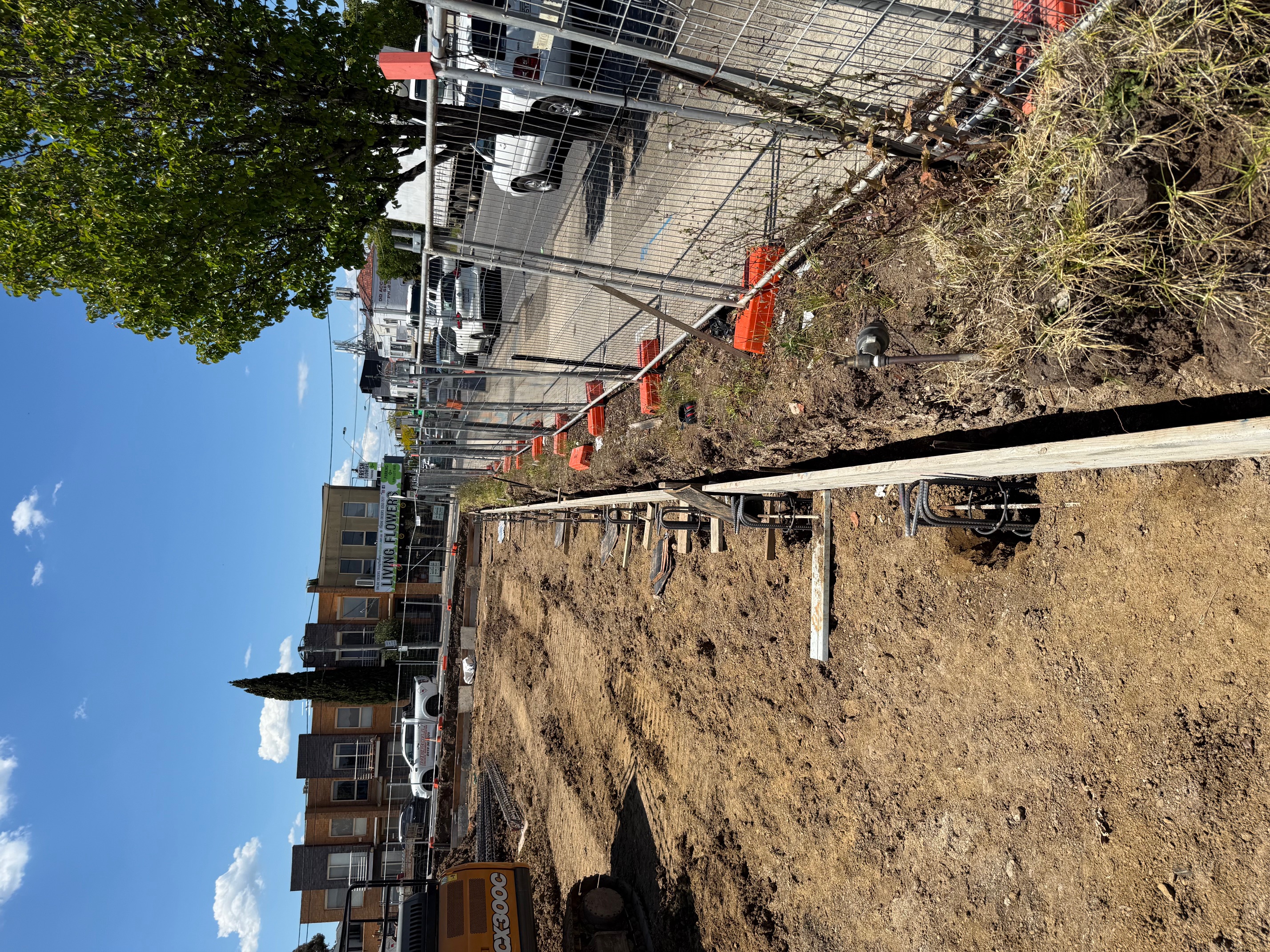
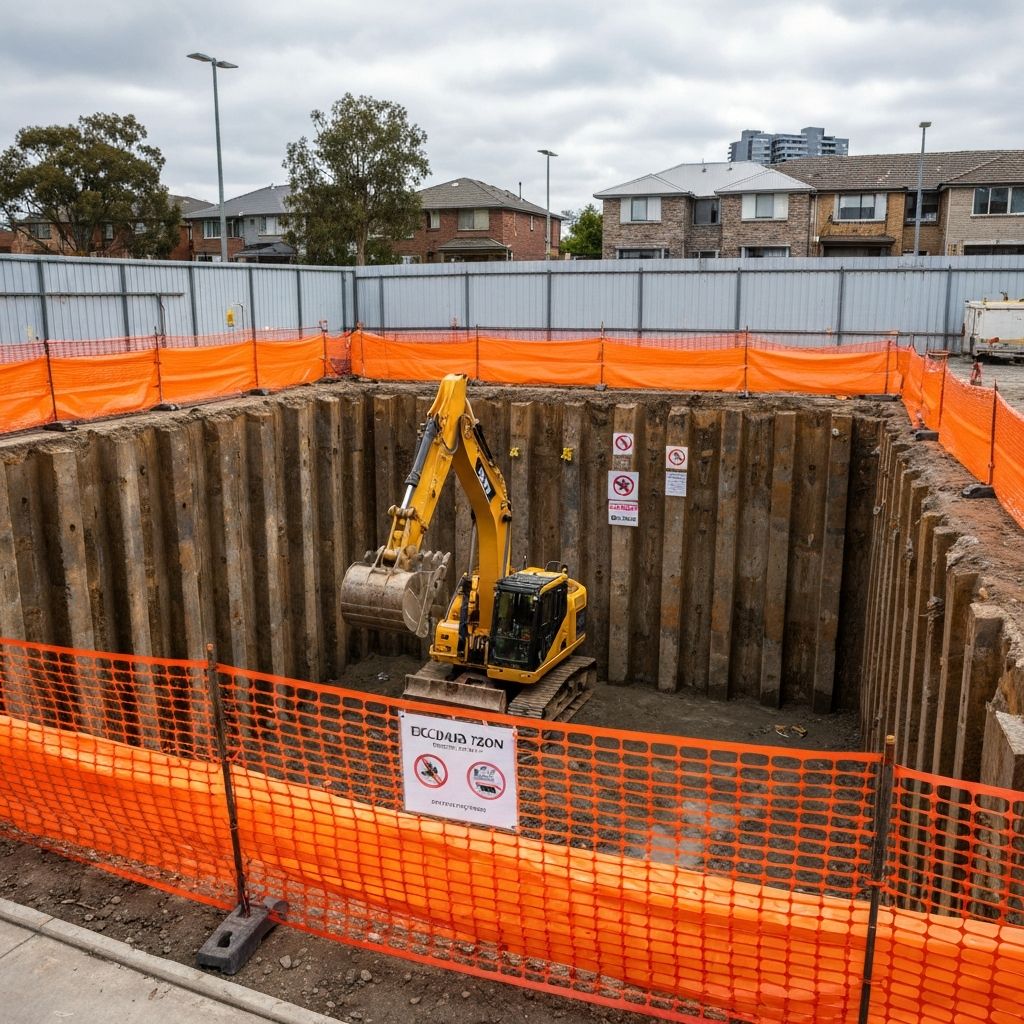
Excavation safety is a legislated requirement under Victorian Work Health and Safety regulations and Australian Standard AS 2601 (Demolition of Structures). Deep excavation introduces significant safety risks including ground collapse, falls from excavation edges, plant rollover, service strikes, and structural failure of adjacent buildings. We implement excavation safety protocols including edge protection barriers, exclusion zones around active excavation, daily excavation inspections by competent persons, and emergency response procedures for ground instability or service damage incidents.
Risk control for excavation includes preparation of Safe Work Method Statements (SWMS) that identify excavation hazards, specify control measures, and define responsibilities for safety management. Our excavation SWMS are site-specific—not generic documents copied from previous projects—and are reviewed with all personnel before excavation commences. We conduct toolbox meetings to communicate excavation risks, ensure all operators hold appropriate licenses and competencies, and maintain plant maintenance records to prevent mechanical failure during excavation operations.
Excavation near existing structures requires monitoring systems to detect ground movement including survey monitoring of adjacent buildings, crack monitoring where visible movement is detected, and vibration monitoring where dynamic compaction or rock breaking is required. We establish baseline surveys before excavation, conduct regular monitoring during excavation, and implement trigger levels that require excavation suspension if movement exceeds acceptable thresholds. Adjacent structure damage creates legal liability, insurance claims, and project delays that exceed the cost of proper monitoring systems.
We also implement traffic management plans where excavation affects public footpaths or roadways, obtain necessary permits including Road Opening Permits and council approvals for spoil removal vehicle movements, and coordinate with building surveyors and certifiers to ensure excavation compliance with approved documentation. Excavation safety is not optional risk mitigation—it is a legal and operational requirement that we treat as non-negotiable on every project.
Excavation for Residential and Commercial Projects
We provide excavation services for residential basement projects including single-level and multi-level basements in new residential developments, basement additions to existing homes, and basement car parking for townhouse and apartment developments. Residential excavation typically involves depths of 2.5 to 6 metres, constrained site access, proximity to neighbouring residential properties, and coordination with residential building schedules that impose strict timelines on excavation completion.
Commercial excavation projects include multi-level basement car parks for commercial office buildings, retail basements for shopping centres and mixed-use developments, basement plant rooms and service areas for high-rise buildings, and basement storage or warehouse facilities for industrial and logistics developments. Commercial excavation involves larger excavation volumes, deeper excavation depths, more complex temporary works including propping and underpinning, and coordination with multiple structural trades including piling contractors, shoring specialists, and waterproofing installers.
We adapt our excavation methodology to project scale, site constraints, and client requirements. Residential projects require noise and dust management to maintain amenity for neighbouring residents, restricted working hours compliance, and careful coordination with residential builders who may have limited experience managing basement excavation subcontractors. Commercial projects demand higher production rates, integration with head contractor programming, and compliance with commercial construction standards including site inductions, insurance requirements, and commercial construction safety protocols.
Whether excavating for residential or commercial basement projects, we deliver excavation services that prioritise structural accuracy, safety compliance, and coordination with subsequent construction trades. Excavation is the foundation stage of basement construction—errors at this stage create compounding issues that affect structural integrity, waterproofing performance, and project delivery timelines.
Need Specialist Excavation Services for Your Basement Project?
Our excavation capability is designed for structurally complex basement construction projects that require technical expertise, safety compliance, and coordinated execution. If you are a property developer or principal builder managing basement works, contact us to discuss your excavation requirements.