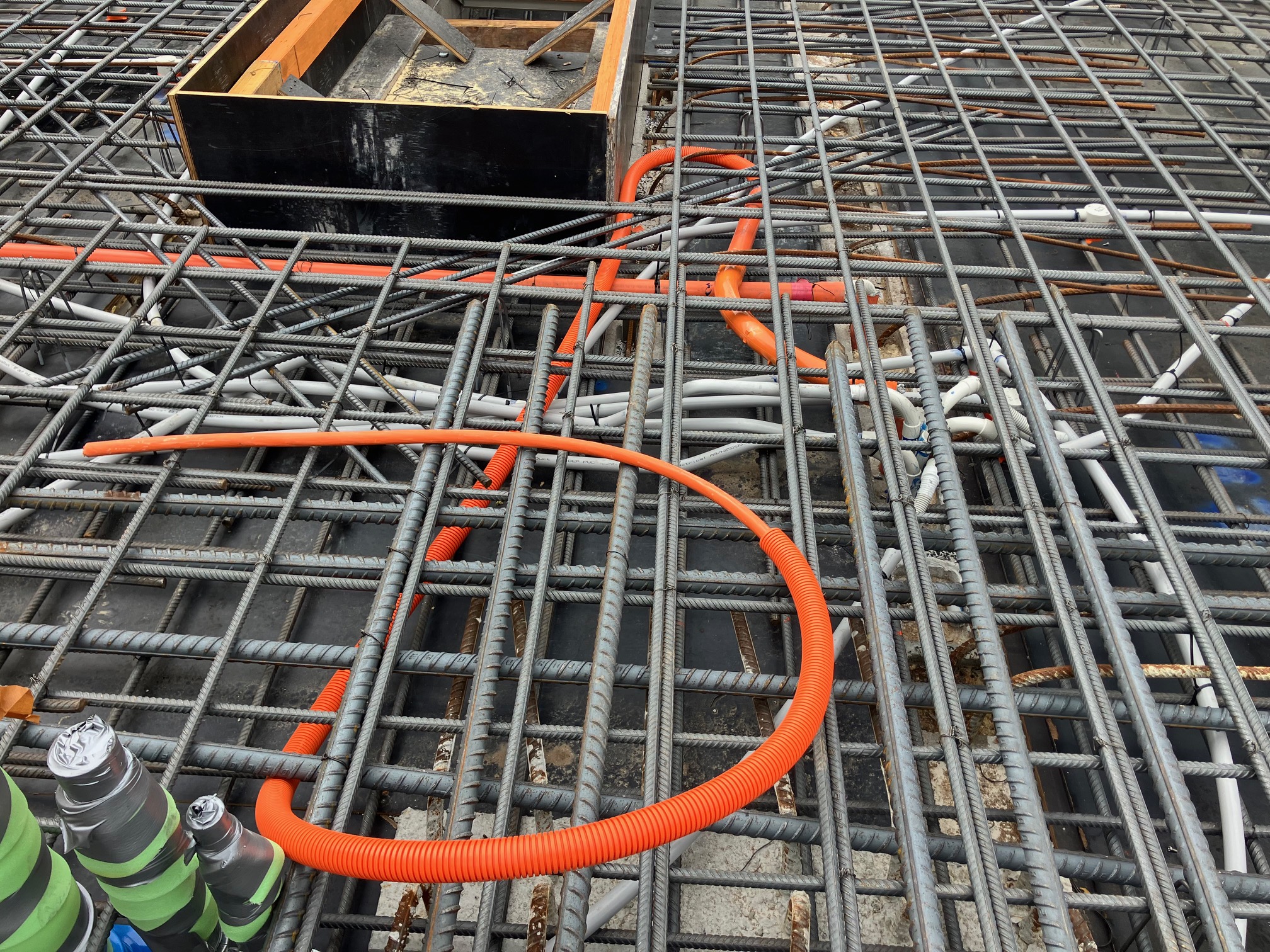
Concrete Piling and Pier Construction
We provide concrete piling and pier construction services for deep foundations, load-bearing basement structures, and projects requiring ground improvement or load transfer through weak soil strata.
Our piling services support projects where foundation depth, bearing capacity, or soil conditions require specialist foundation solutions beyond conventional footings.
Book a Project Consultation
Discuss your basement construction requirements with our specialists.
When Concrete Piling Is Required
Concrete piling is required where surface soil conditions cannot provide adequate bearing capacity for structural loads, where basement construction extends through weak or compressible soil layers including soft clays, loose sands, or fill material, or where structural loads must be transferred to competent bearing strata at depth. Piling is not an optional enhancement—it is a structural necessity determined by geotechnical investigation and structural engineering analysis that identifies bearing capacity deficiencies, settlement risk, or lateral stability issues that cannot be resolved through shallow foundation systems.
Geotechnical site investigations identify soil stratification, bearing capacity, groundwater conditions, and the presence of problematic soils including reactive clays, collapsible soils, or contaminated fill. Where geotechnical reports indicate inadequate bearing capacity, excessive settlement potential, or lateral instability, structural engineers specify piling systems to transfer building loads to competent strata typically comprising dense sand, gravel, weathered rock, or bedrock. Piling depth, pile diameter, and pile spacing are determined through structural calculations that consider applied loads, soil properties, and acceptable settlement criteria.
Basement construction frequently requires piling where basement footings bear on fill material or soft clay strata that cannot support column loads, retaining wall loads, or slab loads without excessive settlement. Multi-level basements introduce concentrated loads at basement columns and retaining wall bases that exceed shallow foundation capacity even where surface soils appear competent. Piling for basements must also resist uplift forces created by groundwater pressure acting on basement slabs, lateral forces from retained soil, and dynamic loads from vehicle traffic in basement car parks.
We do not recommend piling systems—structural engineers specify piling based on geotechnical data and structural analysis. We execute piling installations in accordance with structural documentation, verify pile installation through non-destructive testing including pile integrity testing or load testing where specified, and document pile installation including depth achieved, spoil condition, and installation anomalies. Piling installed without proper specification, verification, or documentation creates structural risk, certification delays, and potential failure under service loads.
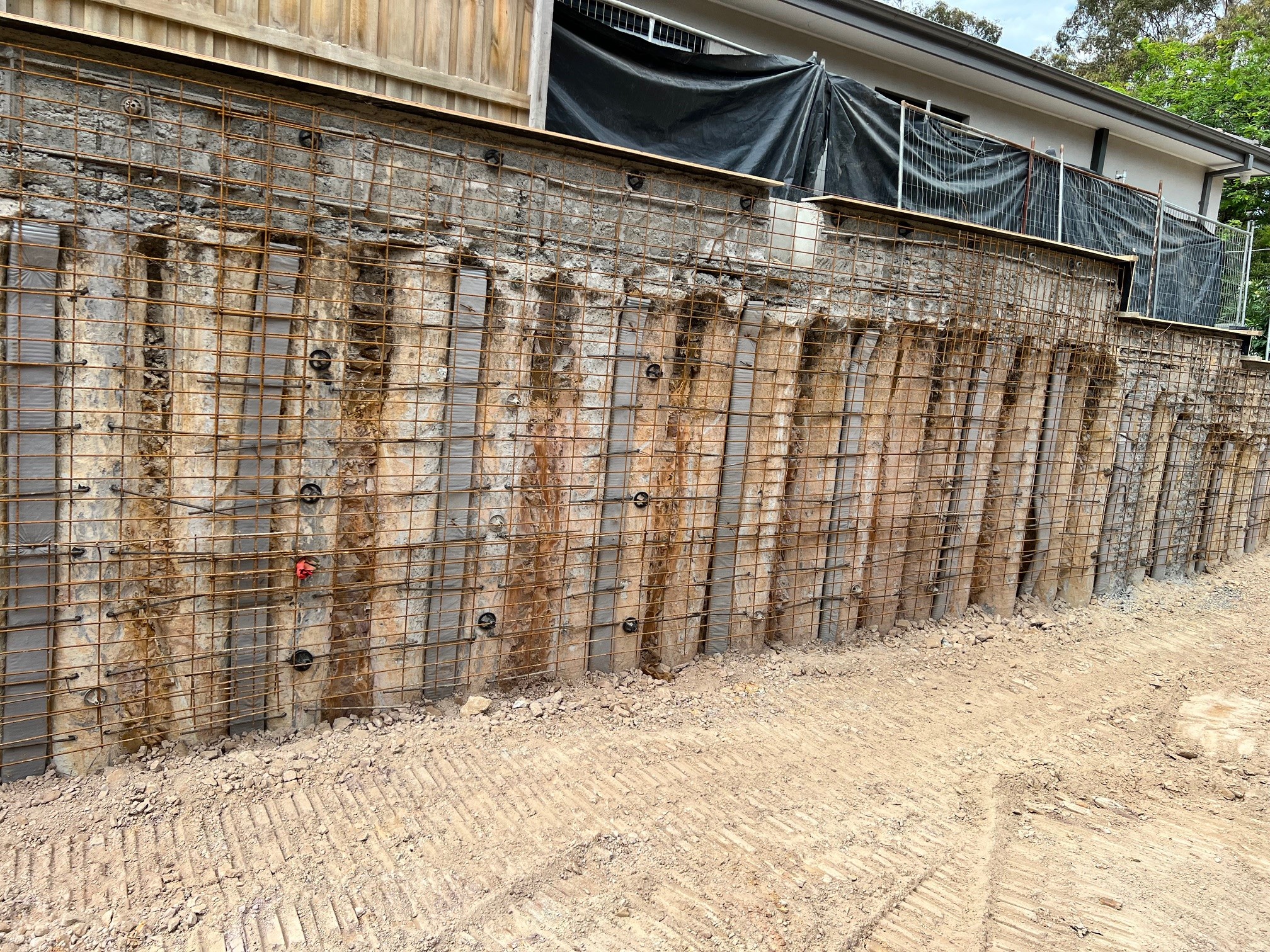
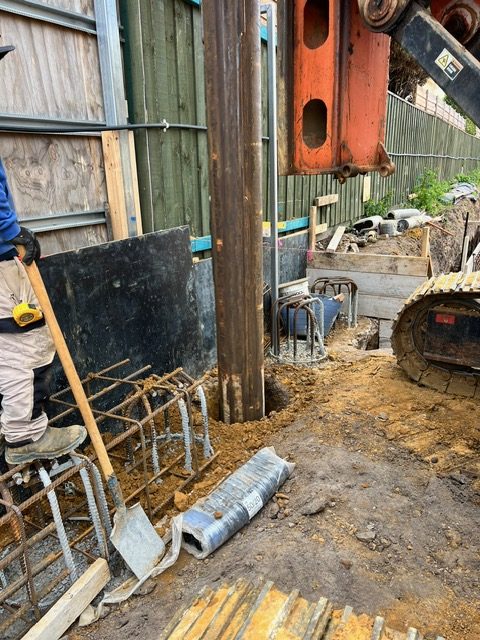
Bored Piers and Deep Foundations
Bored piers are large-diameter drilled shafts constructed by augering or drilling into the ground to design depth, installing reinforcement cages, and placing concrete to create cast-in-place deep foundation elements. Bored piers typically range from 450mm to 1200mm in diameter and extend to depths of 5 to 20 metres depending on soil conditions and structural load requirements. Bored piers are suitable for high-load applications including multi-storey buildings, heavy retaining walls, and basement columns where concentrated loads exceed the capacity of smaller-diameter piles.
Bored pier construction involves drilling using continuous flight auger (CFA) rigs, rotary drilling rigs, or percussion drilling systems depending on soil conditions and site access. CFA piling involves drilling with a hollow-stem auger, pumping concrete through the auger as it is withdrawn, and inserting reinforcement cages into the fluid concrete column. CFA piling is efficient in soft to medium-density soils and minimises ground disturbance compared to driven piling systems. Rotary drilling with temporary casing is used where ground conditions include gravel, cobbles, or weathered rock that cannot be drilled using CFA methods.
Bored pier installation requires verification of bearing stratum through inspection of drill spoil, measurement of drilling resistance, and visual inspection of pier base where accessible. Structural engineers may specify base grouting or base enlargement (underreaming) to increase end-bearing capacity in competent rock or dense sand strata. Reinforcement cages are fabricated to design specification including longitudinal bars, helical ties, and cover requirements, and are installed with spacers to maintain alignment and concrete cover during concrete placement.
Concrete for bored piers must have adequate workability to flow through congested reinforcement, must achieve specified strength within curing periods, and must be placed without segregation or cold joints. We use tremie methods for concrete placement where groundwater is present to prevent water contamination of concrete. Pile integrity testing using low-strain impact testing or crosshole sonic logging may be specified to verify pile continuity, detect defects including voids or necking, and confirm pile length. Bored piers that fail integrity testing require remediation including additional piles, structural modification, or pile replacement depending on defect severity.
Load Transfer and Structural Support
Load transfer through piling systems occurs through end bearing, shaft friction, or a combination of both mechanisms depending on pile type, soil stratification, and pile installation method. End-bearing piles transfer load through pile tips bearing on competent strata including rock, dense sand, or stiff clay. Friction piles transfer load through skin friction developed along the pile shaft where piles extend through cohesive soils including clay or silt. Combined bearing piles utilise both end bearing and shaft friction to maximise load capacity and minimise settlement.
Structural support provided by piling includes vertical load capacity to support building dead loads and live loads, lateral load capacity to resist wind loads, seismic forces, or lateral earth pressure from retained soil, and uplift capacity to resist buoyancy forces from groundwater pressure acting on basement structures. Pile groups comprising multiple piles connected by pile caps distribute loads from columns or walls across multiple piles to increase total bearing capacity and reduce differential settlement between structural elements.
Load testing may be specified to verify pile capacity including static load testing where test piles are loaded incrementally to design load or failure load, or dynamic load testing using pile driving analysers to measure pile response during installation. Load testing provides empirical verification of pile capacity and may allow reduction in pile numbers or pile diameter where actual capacity exceeds design assumptions. Load testing is typically specified for large projects, high-value structures, or projects where geotechnical conditions introduce uncertainty in pile performance predictions.
We coordinate with structural engineers and geotechnical consultants throughout piling installation to address ground conditions that differ from site investigation predictions, verify pile installation parameters including depth, bearing stratum, and installation torque or resistance, and document pile installation through daily pile logs, spoil samples, and installation records. Piling that deviates from design specifications without engineering approval creates structural non-compliance and certification issues that may require additional piles, pile replacement, or structural redesign to rectify.
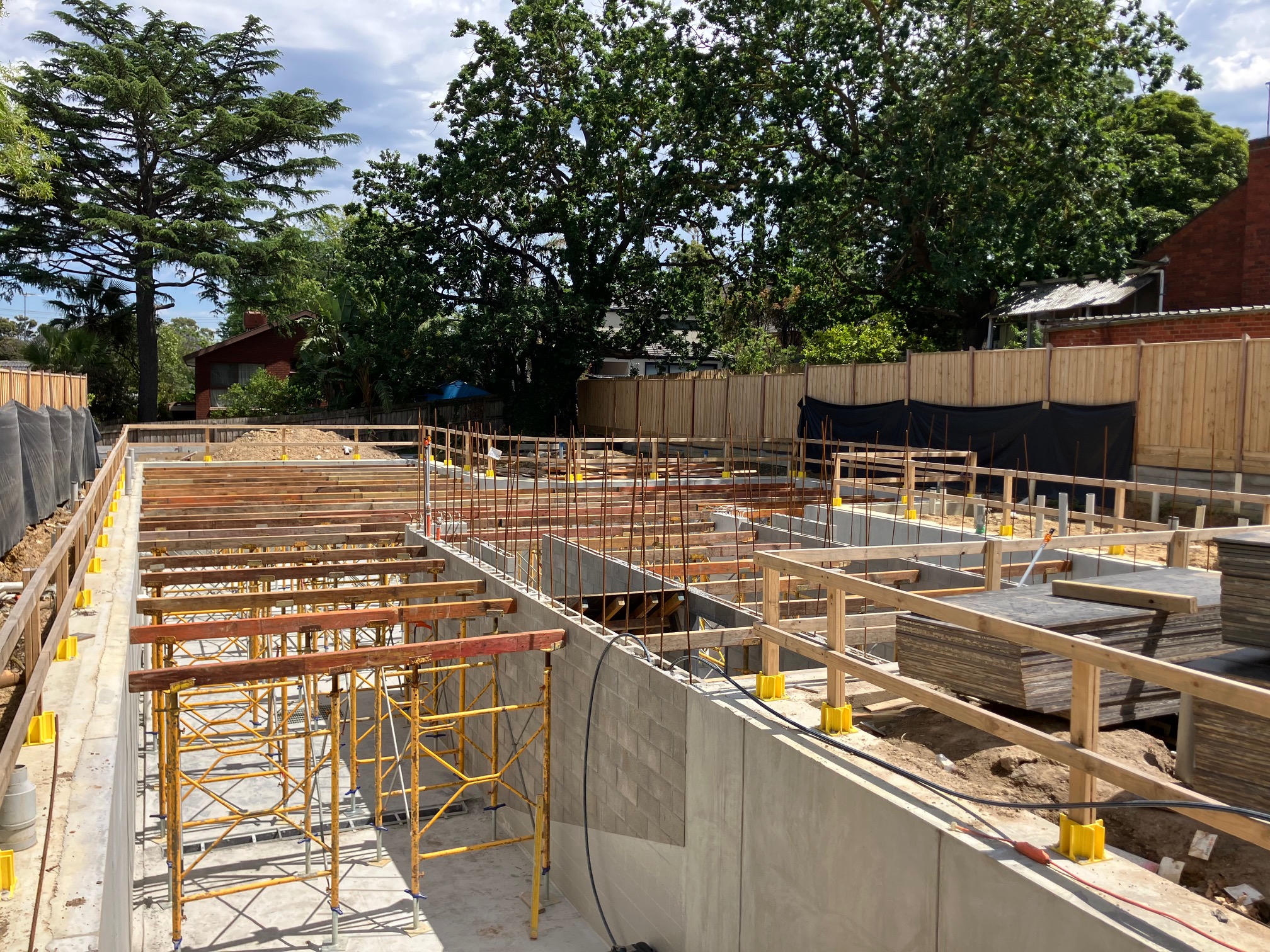
Piling for Basement Construction
Piling for basement construction introduces additional complexity compared to surface piling including coordination with excavation sequencing where piles must be installed before excavation or protected during excavation, pile cut-off and trimming to basement slab levels, and integration of piles with basement retaining walls, slabs, and columns. Basement piling may require installation through existing structures where basements are added to existing buildings, installation in confined spaces with limited headroom for piling plant, or installation adjacent to existing foundations that must not be disturbed.
We execute basement piling including installation of piles before excavation where pile heads are protected during bulk excavation and exposed during detailed excavation, or installation of piles from within excavated basement zones where excavation is stabilised through temporary shoring or battered slopes. Pile installation sequencing is coordinated with excavation staging, formwork installation, and waterproofing operations to maintain construction efficiency and prevent trade conflicts.
Piling for basement car parks must resist dynamic loads from vehicle traffic, accommodate serviceability requirements including vibration limits and deflection criteria, and integrate with basement drainage systems to prevent water accumulation around pile caps. Basement piling also requires consideration of construction tolerances including pile verticality, pile position accuracy, and pile head level tolerances that affect formwork installation and structural alignment.
We provide piling solutions for residential basement projects including single-level basements under existing homes, multi-level basements for townhouse developments, and basement underpinning where new basements are constructed adjacent to existing foundations. Commercial piling projects include multi-storey basement car parks, retail basement structures, and high-rise basement foundations where piling supports transfer structures, core walls, or perimeter columns carrying building superstructure loads.
Engage Specialist Piling Contractors for Your Basement Project
Concrete piling for basement construction requires geotechnical understanding, structural coordination, and installation capability that extends beyond standard foundation works. If your basement project requires deep foundations, load transfer through weak soils, or piling in constrained urban environments, contact us to discuss your piling requirements.